Aging - with Joy, Dignity and Grace
Archetype of the Queen of the Realm of Being
“Wholly unprepared, we embark upon the second half of life. Or are there perhaps colleges for forty-year-olds which prepare them for their coming life and its demands as the ordinary colleges introduce our young people to a knowledge of the world? No, thoroughly unprepared we take the step into the afternoon of life; worse still we take this step with the false assumption that our truths and ideals will serve us as hitherto. But we cannot live the afternoon of life according to the program of life's morning; for what was great in the morning will be little at evening, and what in the morning was true will at evening have become a lie.”
~C.G. Jung
The years beyond sixty, the years of our second maturity, may be evolution’s greatest gift to humanity. No longer needing to compete and to be acceptable, likeable, and all those other things considered respectable in society, people who have been doing their inner work become “uncaged” in their elder years, free to release energies and capacities that the culture restrained in them when they were younger. They balance the inwardness of the ascetic inner reflectiveness with the outwardness of reflected caring deeply for the planet and all beings. They express their spiritual realization in the everyday world. Viewing the world as sacred, they honor the planet and its multitude of species as a single living entity. As “uncaged” individuals they flourish and replenish the earth with their true creative gifts of spirit and realization.
~Jean Houston
So , this is to wish you many years of being one of humanities greatest gifts, free of needing anything from others, but able to give out of freedom, uncaged from ego, filled with beauty, creativity and rich experience. May each of you continue to unfold in every increasing golden spirals of light opening to the infinite nature of yourSelf, just like the nautilus. And on the way - don’t forget the chocolate!
~Lyndall Johnson

Week 1: What are your Fears about Aging, Sickness and Dying?
For this work sheet click here
Top Ten Fears
Loss of independence
Declining health
Running out of money
Not being able to live at home
Death of a spouse or other family member
Inability to manage their own activities of daily living
Not being able to drive
Isolation or loneliness
Strangers caring for them
Fear of falling or hurting themselves
“The second half of life is about a marriage. It is about the union of opposites within us. It is about becoming whole, becoming one. It calls for the final acceptance and integration of diverse parts of oneself. This is an inner wedding and an outer one.”
~Anne Brennan and Janice Brewi: Passion for Life: Lifelong Psychological and Spiritual Growth.
https://www.theatlantic.com/health/archive/2021/11/caitlin-flanagan-aging-60/620679/
Consider the changes you have seen in your lifetime in the world. Try to get a big picture of your life within a social context
Week 2: Archetype of the Queen
This is a complicated and deep teaching, but I encourage you to read it many times and see if you can find what I am talking about within yourself. Can you take the abstract teaching and really see how it is about your own inner experience and psyche? Try to do the exercises over time, coming back to them often and keep mulling it around within, until you reach deeper and deeper insights.
The first task of adult life is to develop into being successful in the external world - get an education, build a career, build resources, earn money and save for old age, build a house, be a model citizen who conforms to the expectations of society, be moral and good, raise children, be good grandparents, get them educated, and on and on. The focus is on success and achievement in the external world. This is largely driven by fears around survival, and the shame you would feel if you did not achieve all of this and look good on the outside and to others.
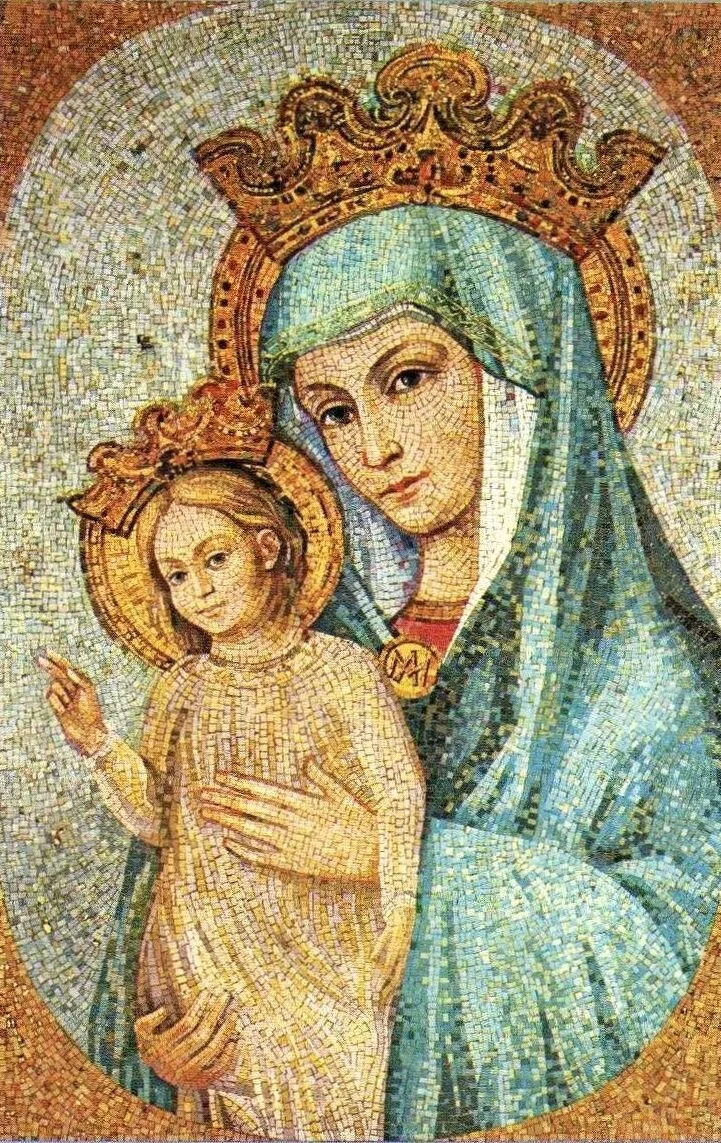
Consider this image of the Queen of Heaven as a depiction of the inner self, the child Jesus being the young soul developing an ego, that will have to be sacrificed in order to live in the resurrection body (Soul) of his own being. We are both fully human and fully divine as is depicted in this image - that is showing part of the journey, not the completion of the journey.
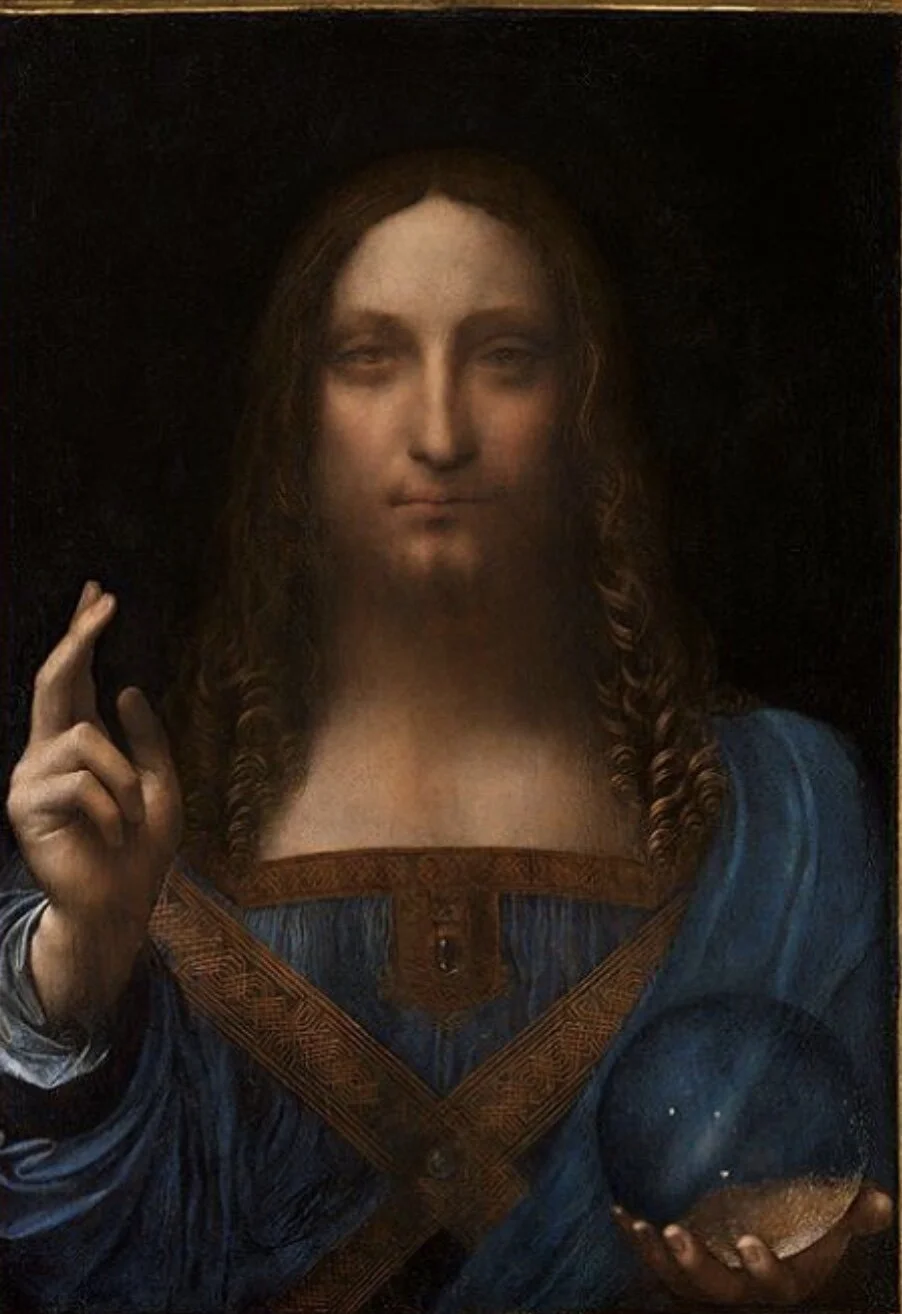
Consider this magnificent image by Leonardo da Vinci, of the mature ego, submitting to the Queen of Heaven (Wisdom and Compassion) depicted by the Peace sign (compassion) and the clear orb (wisdom) that reflects the stars of heaven. This is the most beautiful depiction of the resurrected Soul, with the ego in submission to the will of “God” that I have ever seen.
Taking into account your experiences, mining the depth and breadth of the Queen is all about relationship building, gestating and birthing the new and claiming what is offered to you. The queen invites you to cultivate purpose, creating a centered calm and growing your capacity. The queen insists that you feed your self what it is that you most need. The Queen energy activates empowerment, direction and voice, broadening your leadership abilities and experiencing sovereignty in ways that serves the whole self.
~Cat Caracelo in Archetypes, Expressive Arts, Personal Myth
Highly Recommended CD Listening in your car as you work through this course:
Clarissa Pinkola Estes’ series on old age:
How to Be an Elder
The Late Bloomer and
The Power of the Crone
Recommended Movie
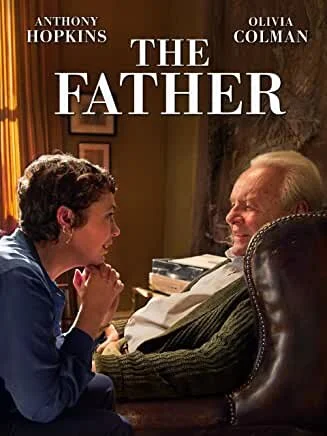
“The Father” - Anthony Hopkins and Olivia Colman
Anthony Hopkins in “The Father” - Winner for Best Actor in a Leading Role, Winner for Best Adapted Screenplay. Overview: A man refuses all assistance from his daughter as he ages. As he tries to make sense of his changing circumstances, he begins to doubt his loved ones, his own mind and even the fabric of his reality.
“Each of us, at mid-life, has to find the way back to wonder. The alternative seems to be that we become jaded. By this time we have been around. We have seen it all, done it all, heard it all. There is little new under the sun for us …We have been hurt many times and our defensive crusts have grown thick. We are at great risk of becoming cynical. Cynicism and bitterness are real possibilities. Real temptations, when one has come face to face with the disillusionment that is at the heart of the mid-life crisis. To be in crisis means that one can go either way. Mid-life is, after all, the end of naïveté.”
~Anne Brennan and Janice Brewi. Mid-Life Spirituality and Jungian Archetypes
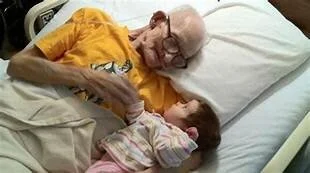
Week 3: What Relationship do you have to your own Physical Needs
If you look at the list of fears in Lesson 1, you will see that most of them relate to the fear of being dependent on others or losing independence in some way.
Understanding our fears of dependency and having to have our needs met by someone else is an important part of the work of old age. Our fears around needs and having them met or not met by others is a developmental task of childhood and if our needs are not correctly met in an age and stage appropriate way, the fear and shame around this lingers on into old age, and the fear of feeling shame will reassert itself as function diminishes.
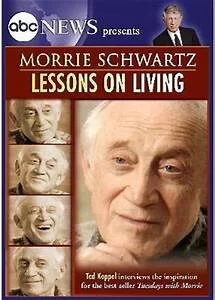
Recommended Movie: Dying with Dignity and Grace as Physical Function Diminishes
(Tuesdays with) Morrie Schwartz: Lessons on Living, Ted ...
“Okay. The story is about a little wave, bobbing along in the ocean, having a grand old time. He's enjoying the wind and the fresh air-until he notices the other waves in front of him, crashing against the shore. "My God, this is terrible," the wave says. "Look what's going to happen to me!"
Then along comes another wave. It sees the first wave, looking grim, and it says to him, "Why do you look so sad?"
The first wave says, "You don't understand! We're all going to crash! All of us waves are going to be nothing! Isn't it terrible?"
The second wave says, "No, you don't understand. You're not a wave, you're part of the ocean.” ~ Morrie
“There is no formula to relationships. They have to be negotiated in loving ways, with room for both parties, what they want and what they need, what they can do and what their life is like. In business, people negotiate to win. They negotiate to get what they want. Maybe you’re too used to that. Love is different. Love is when you are as concerned about someone else’s situation as you are about your own.”
~Morrie Schwartz
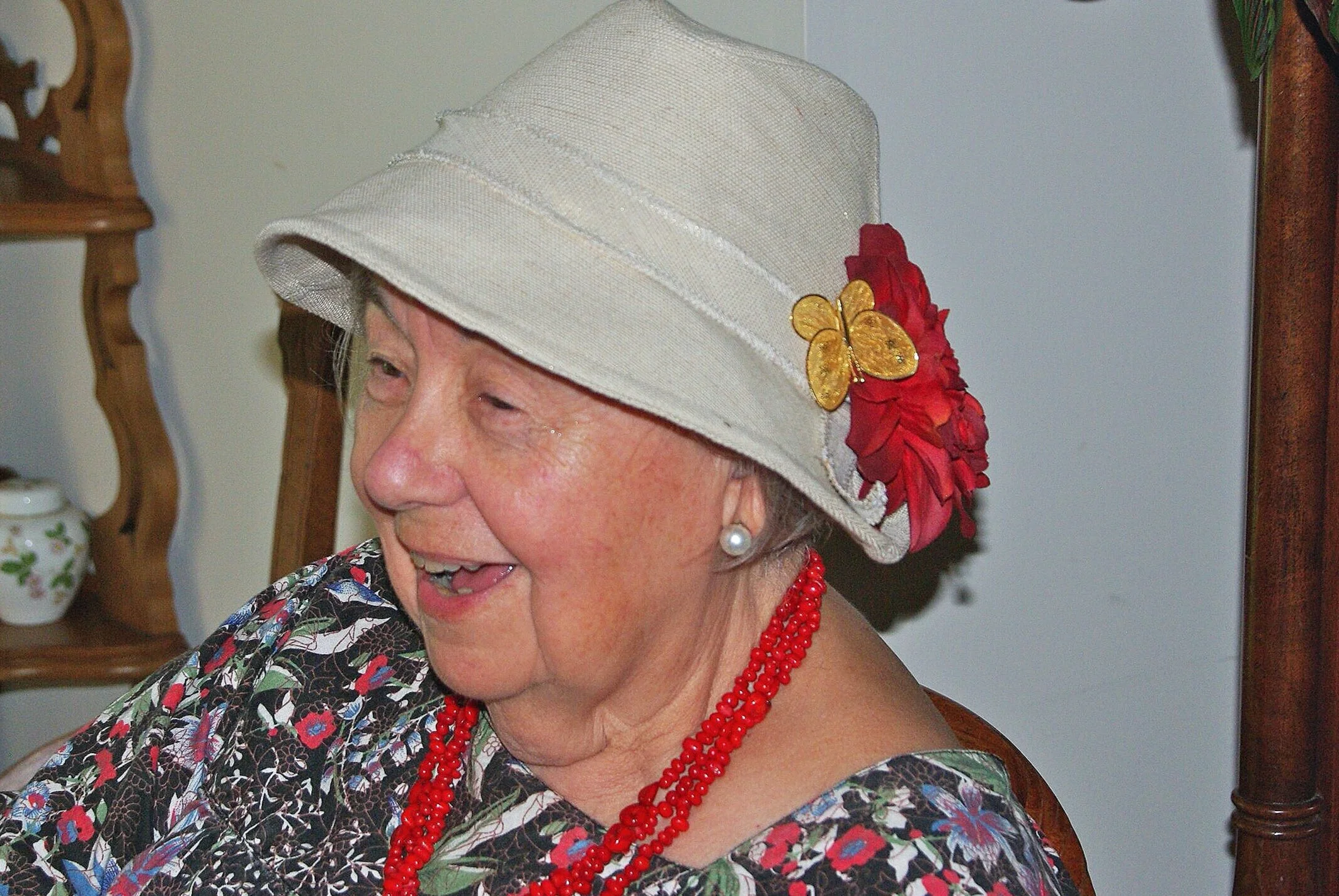
“Let the labyrinth of wrinkles be furrowed in my brow with the red-hot iron of my own life, let my hair whiten and my step become vacillating, on condition that I can save the intelligence of my soul - let my unformed childhood soul, as it ages, assume the rational and esthetic forms of an architecture, let me learn just everything that others cannot teach me, what only life would be capable of marking deeply in my skin!”
~Salvador Dalí
Week 4: What Relationship do you have with your Wrinkles, Sagging Body and Flabby Underarms?
I am not old.. she said
I am rare.
I am the standing ovation
At the end of the play.
I am the retrospective
Of my life as art
I am the hours
Connected like dots
Into good sense
I am the fullness
Of existing.
You think I am waiting to die..
But I am waiting to be found
I am a treasure.
I am a map.
And these wrinkles are
Imprints of my journey
Ask me anything.
~ Samantha Reynolds
“Wisdom puts one in touch with the “deep down things” in one’s own psyche and the psyche of others. Wisdom puts one in contact with “the underground stream” in oneself that connects and relates one to god, to all humanity, and to the ages past, present, and yet to come. Wisdom is the heart of all healing, forgiveness, conversion, good relationships, right order, wholistic styles of life, praying and playing. Wisdom allows one to deal with ambiguity and live with paradox. Wisdom brings the child out of the adult and the adult out of the child. Wisdom allows one to bring good out of evil and discern life in death.
The Wisdom archetype is manifested in all the wisdom literature of the great religions. Wisdom is a quest inherent in the life journey of each individual. It allows one to find meaning and interpret one’s own life journey. Wisdom puts one in contact with the unique significance of one’s life story.”
~Janice Brewi and Anne Brennan. Mid-Life Spirituality and Jungian Archetypes
Beneath the Sweater and the Skin
How many years of beauty do I have left?she asks me.How many more do you want?Here. Here is 34. Here is 50. When you are 80 years oldand your beauty rises in waysyour cells cannot even imagine nowand your wild bones grow luminous andripe, having carried the weightof a passionate life. When your hair is aflamewith winterand you have decades oflearning and leaving and lovingsewn intothe corners of your eyesand your children come hometo find their own historyin your face. When you know what it feels like to failferociouslyand have gained thecapacityto rise and rise and rise again. When you can make your teaon a quiet and ridiculously lonely afternoonand still have a song in your heartQueen owl wings beatingbeneath the cotton of your sweater. Because your beauty began therebeneath the sweater and the skin,remember? This is when I will take youinto my arms and cooYOU BRAVE AND GLORIOUS THINGyou've come so far.I see you.Your beauty is breathtaking. © Jeanette EnciniasWeek 5: What is your Relationship to “Loss of Control?”
The first half of life was all about controlling one’s body to function and do what you wanted it to do. You learned to crawl and then walk, to think and understand the world, to accomplish with your hands and strength, to “get things done,” and now you find you cannot control your body to open the child proof container of your own medication.
Consider a simple example like trying to open something that used to be easy for you. What is your immediate reaction? What do you say? How do you feel? How are you relating to your body that cannot any longer control aspects of the external world? Do you hate, shame and rage at your body? Do you hate, rage and shame at the external thing (the pill bottle) that you cannot control with your body? Are you aware of your feelings? Do you have humor? Do you deny? Think very carefully about your part in your relationship to your body.
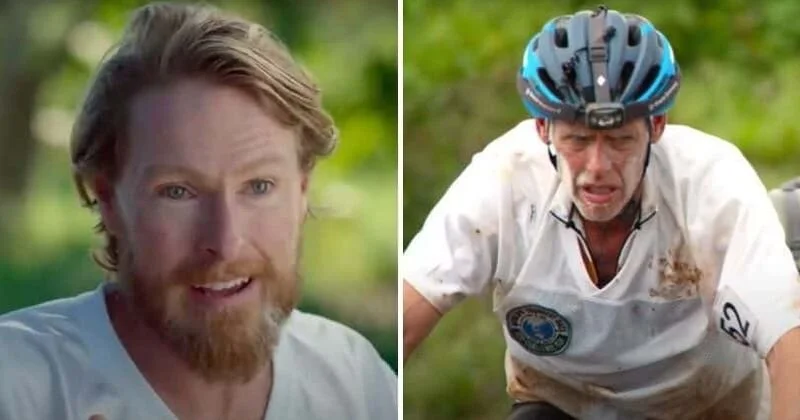
Watch the Series: The Worlds Toughest Race: Eco-Challenge Fiji for a remarkable real life story of a father and son. The father has spent his life doing this kind of iron-man challenge, and now he has the start of Altzheimers disease. The love, encouragement, tenderness in the relationship between father and son and the whole team, says everything about the father’s inner relationship to himself that is also beautifully portrayed. He has to give up, not in shame, but some sadness and also joy that he did what he could now that he could no longer control his body in the same way. He does it, indeed, with dignity and grace. This is an example of doing what you can and not indulging in self pity, and also not doing when it is no longer possible without self-recrimination and raging.
“Suffering whispers, shouts, and screams the story no-one wants to remember:
we are not in control, and we are all going to die.” (as we were as children)
~K.J. Ramsey, This Too Shall Last: Finding Grace When Suffering Lingers
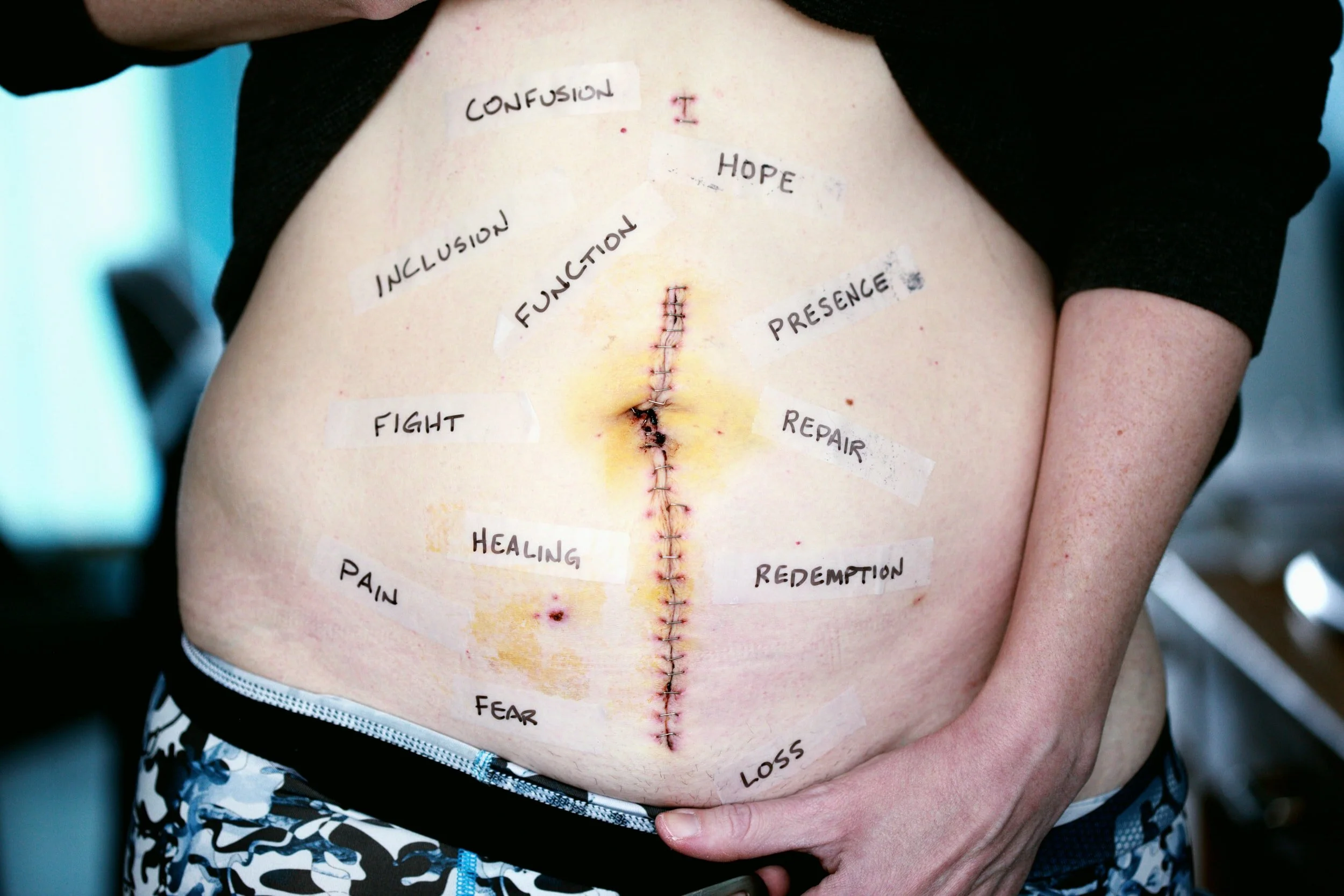
Week 6: Let’s Talk about Cancer and other Chronic Diseases
The language we use when talking about disease or malfunction of the body is extremely important. Language reflects attitude and how we live our lives.
We cannot use the language of war and hatred to heal the body, or anything else for that matter. We all know that if someone calls you a name and you retaliate you will have a fight on your hands. And yet we talk about fighting cancer, making war on cancer, destroying the cancer and treating it like an enemy of the body – but it is the body malfunctioning.
For more … Read here
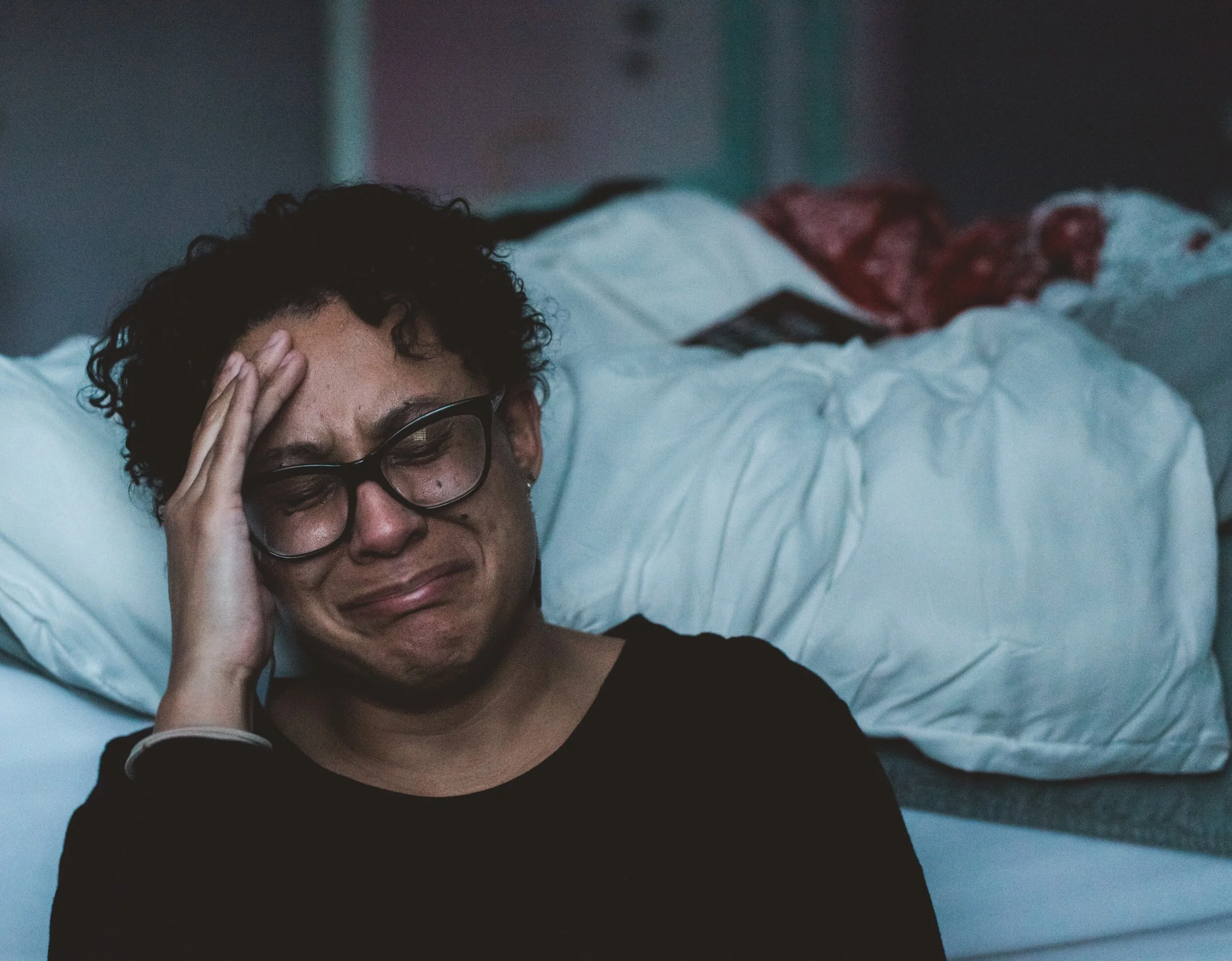
Week 7: And What if I am in the Caretaker/Caregiver Role as a Partner and the one left behind?
A great deal is being requested of you. Not only do you have to give of your time, attention and service, but also your heart, in the midst of a life already full of other demands.
As you care for your loved one, your own heart will be breaking. You will feel the grief of all the daily losses in your own life. There is a slow dying as your loved one can no longer be fully present to your emotional, physical and mental needs and as you meet more and more of theirs. You will feel the grief of the loss of your loved one’s presence to you, gradually, painfully and in the end, finally. You will feel the loss of your life as you have known it until now and the anticipatory losses in the future. This will also bring up all the old unresolved losses of your entire life.
Mom’s Purse – Catherine Wilson ©
from the upcoming book A Trail of Breadcrumbs
by Catherine Wilson and Lyndall Johnson
I went through all the pockets
of my mother’s tan purse
the day after she died,
feeling curious, yet somehow guilty.
I kept tissue packs, a bit of cash,
and a card I gave her
with affirmations about her value in the world.
I threw away toothpicks and mints
collected from favorite restaurants,
placed her ID in a file,
and shredded checks from a closed account.
I found her safety deposit box key
which we had searched for in vain
and paid to have replaced.
I recycled keys to unknown locks
along with one to her house
sold sixteen years ago.
I remember her recurring nightmares
of losing her purse.
Something in me still wanted to keep it safe for her.
I thought for a moment about using it myself
but no,
this tan purse will be donated
for someone else to watch over
as I continue to release the caretaker job
I held for so long.
I placed the purse in a pile
bound for the homeless shelter
and wondered when I would be able to bring myself
to delete her name from my phone.
Exercise:
As you age you will find yourself in the Caregiver Role more often as parents, friends and colleagues die. Consider your role - do you give care or do you take care? The one is a giving from the heart. They other is a giving in order to get ego needs for power and goodness met. As with everything in life, this is a both/and. Try to tease apart the motives, feelings, thoughts, needs and actions you engage in as you caretake and caregiver those older than you and those dying. What are you learning in the process? What does this poem about the aftermath of death evoke in you?
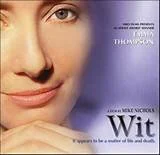
Recommended Movie: Wit
One of the most brilliant movies of our current zeitgeist that I have ever seen about our attitude to suffering
Professor Vivian Bearing (Emma Thompson), an expert on the work of 17th-century British poet John Donne, has spent her adult life contemplating religion and death as literary motifs. Diagnosed with advanced ovarian cancer, she consents to an aggressive and experimental form of chemotherapy administered by Dr. Kelekian (Christopher Lloyd) and his assistant, Dr. Posner (Jonathan M. Woodward), her former student. Facing death on a personal level, she reflects on her life and work.
“Now is a time for, dare I say it, kindness. I thought being extremely smart would take care of it. But I see I have been found out.” ~Margaret Edson, Wit

Week 8: The issue of Hearing Loss (and other Losses of the Senses)“
Age-related hearing loss (presbycusis) is the loss of hearing that gradually occurs in most of us as we grow older. It is one of the most common conditions affecting older and elderly adults.
Approximately one in three people in the United States between the ages of 65 and 74 has hearing loss, and nearly half of those older than 75 have difficulty hearing. Having trouble hearing can make it hard to understand and follow a doctor's advice, respond to warnings, and hear phones, doorbells, and smoke alarms. Hearing loss can also make it hard to enjoy talking with family and friends, leading to feelings of isolation.”
https://www.nidcd.nih.gov/health/age-related-hearing-loss
How many of you were shamed or punished as children for “not listening? When we did not obey our parents, it was assumed we did not hear, or did not listen. They might even have shouted at us with words like, “Are you deaf?” “How many times do I have to tell you to….”
For more … Read here
“Few folk claim to enjoy having trouble hearing. But let’s explore the effects of hearing loss on our life.
First: we are not alone. Most people begin to lose some hearing ability in their sixties. They may not notice but those around them do. Sudden hearing loss is rare and most loss of hearing is gradual. By the time we reach 80, seventy five percent of folk have significant hearing loss. And, less than 25% of them ask for professional help.
Second: most hearing loss is for higher pitches: consonant sounds become softer and speech sounds muffled.
Sounds rather gloomy and not too lovable. But think about this: you have more lovely quiet moments. And because the way to offset the effects of hearing loss is to become more intimate: more one on one and closer, relationships can naturally become richer.True, you won’t function as well in large gatherings, but you can create less acoustically complicated ones.One grandchild at a time, one friend at a time. Also, create quieter communication environments. Mute the TV, choose quieter restaurants. The gifts of aging are wisdom and time. What better way to enjoy our wisdom than with a good friend, in a quiet place.” ~ Anne Seltz/Audiologist

From where have you come and to where are you going. As your current state of consciousness is now, so it will be after death too. What changes is what you choose to change now.
Week 9: Life Review as Spiritual Practice
“Life has no meaning. Each of us has meaning and we bring it to life. It is a waste to be asking the question when you are the answer.” ~Joseph Campbell
They say, that in the moment of death, your whole life flashes before your eyes. If this happens, so what? How would you feel if your life flashed before your eyes?
Let’s see if we can consider doing this before the moment of death. Take time to review your whole life and then answer your own questions about your life. Journal about these questions and make intentions and resolutions, now, before it is too late. To live our lives in the review of the last moment of our lives, every day is a powerful practice.
“Soon after I sent out my last "Letters from an Open Heart" my mom called to tell me she had cancer. Unlike the indomitable spirited woman I knew, she sounded small and scared. I felt grateful as she began to cry because it kept my heart from clamping shut against the image of her dying. Instead, the shared grief created a tender meeting place between our breaking-open hearts. And then she said, "Your dad needs to talk to you."
I expected to hear from him some helpful direction on how to best support my mom, but instead I heard: "Sorry for the double-whammy but I have cancer too." My healthy all-life-is-impermanent perspective fell away. Tears flowed until we said our good-byes; I hung up the phone and curled into my partner's arms.
A simple idea occurred to me as I cried: cancer or not, my parents will die or maybe I will die first. The news of cancer was therefore just a clanging alarm, calling on us to take inventory of our loves and lives. Have we appreciated each other enough? Have we said all we wanted to say? Have we lived in service of something bigger?
I drove to see them the next day. They were annoyed that the medical procedures would cut into their fishing season and they remarked, not for the first time, that aging wasn't for sissies, but to my surprise they seemed remarkably at ease. And I instantly knew why. They have very little unfinished business. They have lived and loved and served well. There was no need to mend bridges, write and fulfill a bucket list, or make peace with God. I have always admired my parents, but for the first time I was able to really understand how remarkable they are.
If I were to find out tomorrow that I had less than a month to live, would I panic and scramble to right my life, or would I feel instead a sense of contentment? If the answer is the former, what can I do today to begin the process of changing that?”
Blessings and love to you, Annie O’Shaughnessy.
P.S. Both my parents' cancers have been detected early and their prognoses are good.
Annie O’Shaughnessy. Living Well, Dying Well.
Week 9: Living in an Age of Denial of Aging, Illness and Death
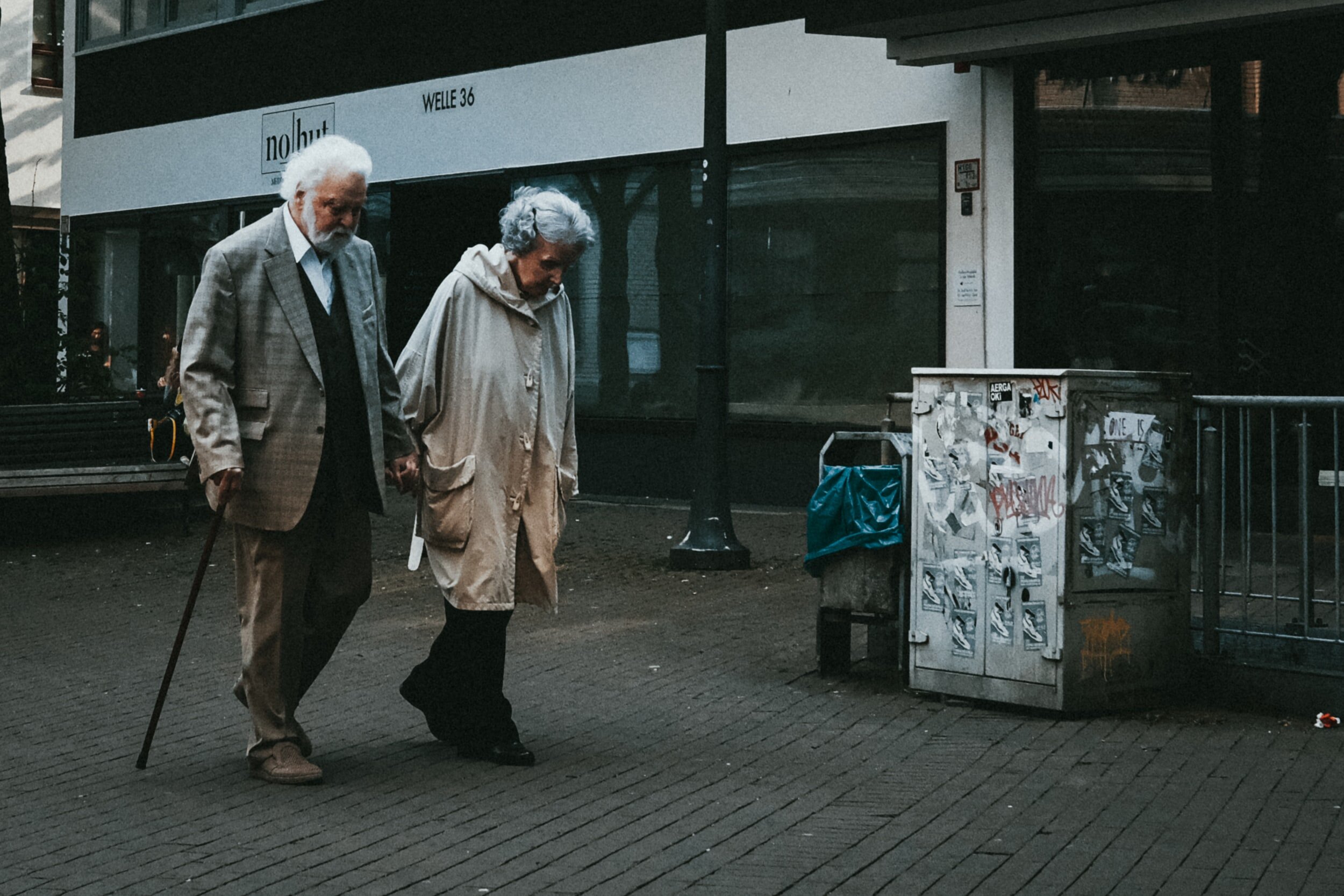
JANE
Jane, the old woman across the street,
is lugging big black trash bags to the curb.
It's snowing hard, and the bags are turning white,
gradually disappearing in the storm.
Jane is getting ready to put her house on the market
and move into a home of some sort. A facility.
She's just too old to keep the place going anymore,
and as we chat about this on the sidewalk
I'm thinking, I'm so glad this isn't going to happen to me.
It seems like a terrible fate, to drag out your trash bags
and then head for a facility somewhere.
And all the worse to be old in a facility. But then,
that's the whole reason you go there in the first place.
But the great thing about being me, I'm thinking,
as I continue my morning walk around the block,
is that I'm not going to a facility of any sort.
That's for other people. I intend to go on
pretty much as I always have, enjoying life,
taking my morning walk, then coffee
and the newspaper, music and a good book.
Europe vaguely in the summers.
Then another year just like this one,
and so forth and so on.
Why change this? I have no intention of doing so.
What Jane is doing-—growing old,
taking out her ominous black trash bags
to vanish terribly in the snow, getting ready
for someone to drive her to a facility—
that may be her idea of the future (which I totally respect),
but it certainly isn't mine.
George Bilgere, “Jane” from Imperial. Copyright © 2014 University of Pittsburgh Press.
Recommended Reading:
The Grace in Aging
and
The Grace in Dying
Kathleen Dowling Singh
Highly recommended in understanding “dying in life,” as an ongoing spiritual practice
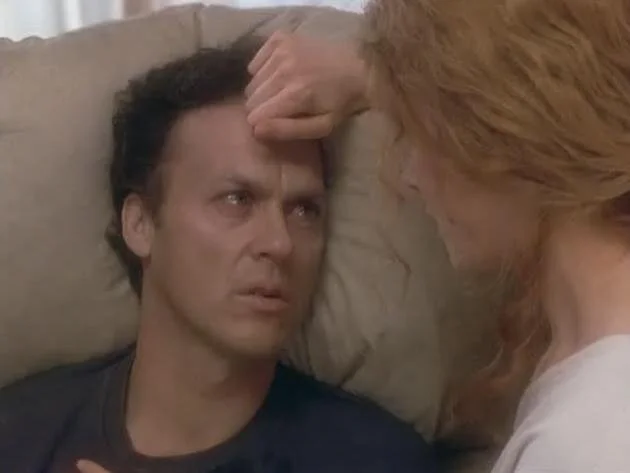
Recommended Movie:
My Life
Michael Keaton and Nicole Kidman
Denial, Resolving Old Issues, the Role of the Caretaker - and more
Week 10: It is all about Relationship
“In this very being of yours,
you do not perceive the True;
but there in fact it is.
In that which is the subtle essence
of your own being,
all that exists has it’s Self.
An invisible and subtle essence is the Spirit of the whole universe.
That is the True, that is the Self, and thou art That.”
~Upanishads
When I was in the hospital, the one person whose presence I welcomed was a woman who came to sweep the floors with a large push broom. She was the only one who didn’t stick things in, take things out, or ask stupid questions. For a few minutes each night, this immense Jamaican woman rested her broom against the wall and sank her body into the turquoise plastic chair in my room. All I heard was the sound of her breath in and out, in and out. It was comforting in a strange and simple way. My own breathing calmed. Of the fifty or so people that made contact with me in any given day, she was the only one who wasn’t trying to change me.
One night she reached out and put her hand on the top of my shoulder. I’m not usually comfortable with casual touch, but her hand felt so natural being there. It happened to be one of the few places in my body that didn’t hurt. I could have sworn she was saying two words with each breath, one on the inhale, one on the exhale: “As … Is … As … Is …”
On her next visit, she looked at me. No evaluation, no trying to figure me out. She just looked and saw me. Then she said simply, “You’re more than the sickness in that body.” I was pretty doped up, so I wasn’t sure I understood her; but my mind was just too thick to ask questions.
I kept mumbling those words to myself throughout the following day, “I’m more than the sickness in this body. I’m more than the suffering in this body.” I remember her voice clearly. It was rich, deep, full, like maple syrup in the spring …
I reached out for hand. It was cool and dry. I knew she wouldn’t let go. She continued, “You’re not the fear in that body. You’re more than that fear. Float on it. Float above it. You’re more than that pain.” I began to breathe a little deeper as I did when I wanted to float on a lake. I remembered floating in Lake George when I was five, floating in the Atlantic Ocean at Coney Island when I was seven, floating in the Indian Ocean off the coast of Africa when I was twenty eight. Without any instruction from me, this Jamaican guide had led me to a source of comfort that was wider and deeper than pain or fear. Dawna Markova. No Enemies Within
Week 11: I’m Retired, Now What? - The Meaning of Life
As a white candle
In a holy place
So is the beauty
Of an aged face.
~Joseph Campbell
Did your job give meaning to your life? What was the meaning in the work you have done all your life? Was it creative and from your soul, or a means to an end and soul destroying? Why did you do the work you did? Was it a combination of being meaningful and not meaningful. What split does this represent within yourself.? Every thing is meaningful when it comes from a heart of love and truth. What got in the way of it being deeply creative, meaningful and an outpouring of passion from your soul?
https://www.nytimes.com/2021/07/20/arts/adult-cello-lessons.html - watch this for a beautiful interview about a 93 year old playing cello and picking up a childhood passion after retirement
To Be When I Die
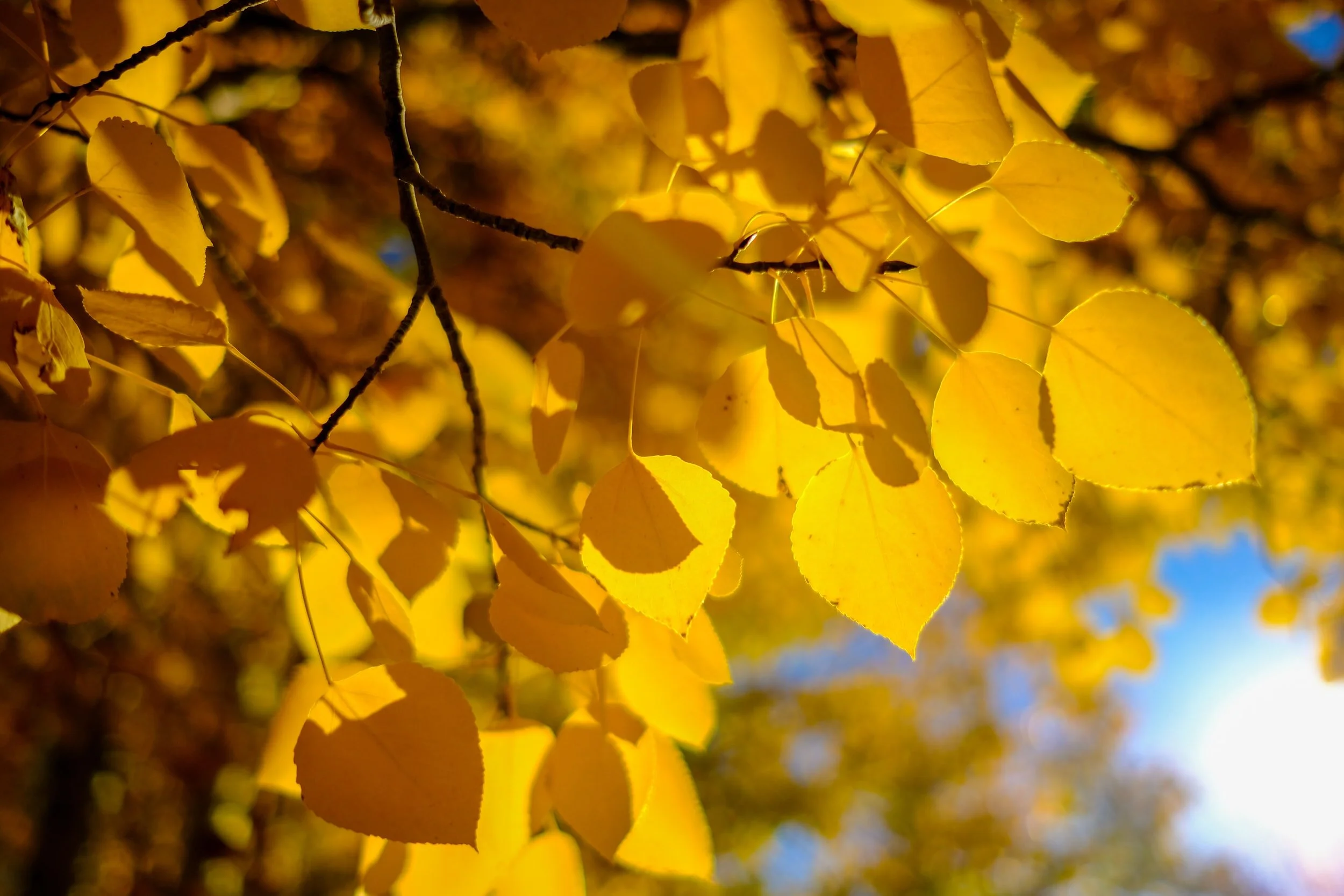
I want to die when I feelConscious with the clarity of the air On a cool, crisp, clear autumn day,So crystalline cleanthat the deep heavens beyond the sun are visible, When my mind is mirror smooth, Still and serene, Like the deep water of a lake,Reflecting the glorious colors of creation,Scarlet, ochre, indigo, rich dark green, Holding on to the tree of life, tenuously,but golden in the light of sapphire blue spaceAnd then, surrendering,slowly,drifting gently down to the moist, loamy earth, generous and wide,open to receiving the dying of this season of life, my soul melting into the warmth of the dancing, sparkling sunlit space,of such a day in autumn.© Lyndall Johnson
Week 12 - Holding on to Clutter? Die to Ego, day by day…
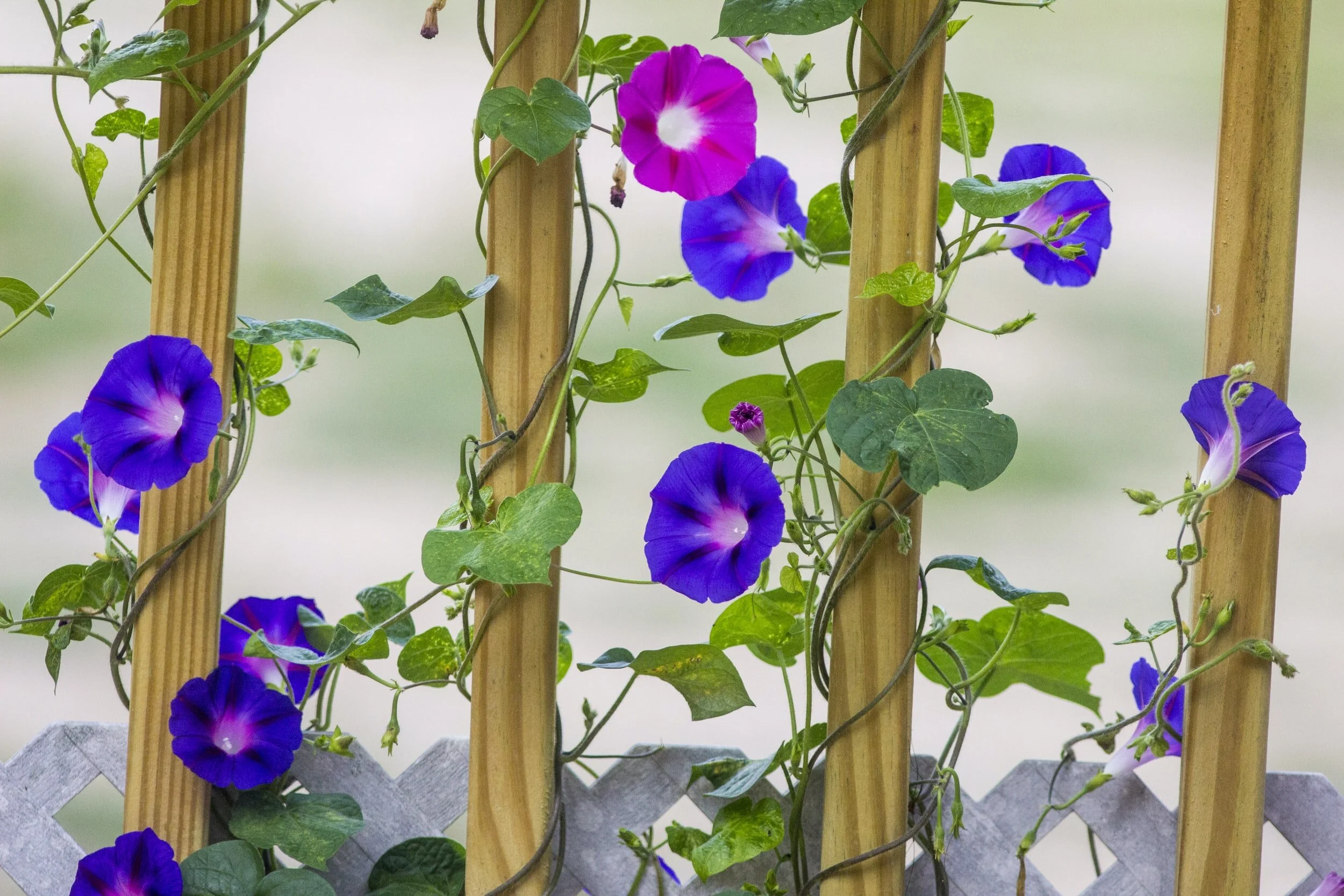
Morning Glories – Catherine Wilson ©
from the upcoming book A Trail of Breadcrumbs
by Catherine Wilson and Lyndall Johnson
I finally planted morning glories in my yard.
Tiny sprouts grew to vines through the summer
trained up a trellis on the fence
and now, silent electric-blue trumpets
herald delicate beauty every morning.
By afternoon each blossom is gone –
withered and crumpled.
I see them from my window
between trips down the stairs
with boxes of papers I saved –
fragments of achievements now gone,
folded into themselves
in this afternoon time of my life.
I miss those bright joys
like I miss the sweet, blue trumpets.
But, better to be glad
for the miracle each flower was,
trusting there will be
fresh blossoms.
I will pay attention
so I won’t miss the fragile and glorious time
they bloom themselves into the world.
Then it will be easier to let them go
with a smile
when they fade.
Exercise:
Consider what you hold on to as proof of your value. Holding on is a defense, a desperate grasping at the proofs of identity and value as if to say to yourself, “Yes, I did something worthwhile. I contributed something worthwhile. This means I had worth. Old university papers you wrote, plaques of achievement and success, accumulations and collections to win admiration. Do you still need these things? Are they perhaps now outdated as you expand into the knowing of your True Identity. Decide each day to unclutter your home and throw something out, sell it, or give it away. Learn to take mental photos so that you live in the moment and receive the beauty of the world and the people all around you right now, instead of spending time remembering past glories, past flowerings, past growth. Stop hanging on to symbols of ego success.
Week 13: What is your Relationship and Understanding of your Brain? The Issue of Dementia.
Question:
What happens to our memories when we die? Do they live on after our bodies are no longer?
Answer:
Nothing is ever lost - each expansion (death) incorporates every stage and experience from before. This is a principle of evolution. Infinity embraces, contains and holds everything, nothing can be discarded or rejected in the wholeness of unity and infinity. Every bit of the time/space continuum is held within the vast infinity of Consciousness (God or the Pure energy of Love and Truth).
https://www.youtube.com/watch?v=fyZQf0p73QM
Music is the language of the soul - music is the most accessible part of memory in consciousness even when the brain is dying. Start making your own collection of music for yourself and listen every day. Watch this touching video of Henry.
Being
In all it’s florid details
All it’s spinning pulsing particles
Every bond it makes
And every bond it breaks
Is held entirely in being
Being is the binding of spacetime
To the timeless dimension
It is both the instantaneous moment
And the akashic record.
Do not try to resolve these paradoxes
They are the essential mystery
That binds unity.
Allowing your body-self to dissolve
In the warm bathwater of being
You discover your knots
Each one begging to stay hidden
© Darell Shaffer
Week 14 - Wasting Time
As we age we all become increasingly aware of how precious time is and become more and more reluctant to spend our time in ways that seem wasteful of our life energy. Mary Pipher in her book, Another Country - Navigating the Emotional Terrain of our Elders,” talks about inventing a mnemonic device to help her make good decisions about time. She decided she needed five things in her life:
Dancing in the Light – Catherine Wilson ©
from the upcoming book A Trail of Breadcrumbs
by Catherine Wilson and Lyndall Johnson
I glided through the clear, warm water
of the pool, delighted
by the silky all-over caress
and the shimmer of sunlight reflecting
off the blue tiles on the bottom.
I had music in my ears
through my waterproof player
and as I entered a patch of sun,
momentarily blinded by its intensity,
the music invited,
“Dance into the light.”
I thought, if I died right here and now
I would dance into The Light
grateful for this day
that has endowed me with
health, invigorating pursuits,
opportunities to serve,
and the privilege of telling those I love
that I love them.
A rich, whole, complete day
dancing in The Light
blessed beyond measure.
Exercise: Consider how this poem both reflects and is also an expression of the 5 things Mary Pipher talks about in her book. Do a daily inventory of how you day was both a reflection of and expression of the 5 things.
Week 15 - Final Thoughts
I have watched spring come this year
while staying in a winter house.
Outside my parents’ home
life is coming back
to the trees and to the land,
but my father is walking
with painstaking, faltering steps
into the end of his life.
Consider these beautiful poems by Catherine Wilson and think about how you would like to end your days; With whom? How do you want your life to be acknowledged, recognized, honored and be laid to rest. Have you spoken about this with those you love? Make a list of conversations you still wish to have as you take the last painstaking faltering steps into the end of physical life. For what are you afraid to ask? What are your beliefs about the afterlife? Can you give instructions to someone as to what you would like done with your body? Who do you trust to truly honor and respect your body and your dying? Can you trust yourself to honor and respect your body and your dying? How will you ritualize this?
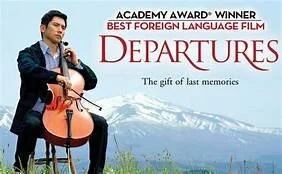
Exercise: Watch the moving and beautiful movie “Departures.”
Gathering Light for Winter - by Jeanette Encinias
When you have no words for the wounds.
When your body is as hollowed out and dark
as a jack-o-lantern
in November.
When you have lost your north, your south,
your east and your west
stay still.
Words for the pain are forming
beneath the skin of your patience.
Your body is gathering light for winter.
Your compass is emerging through water.
Sometimes dying is the only way to live again.
It may take all your stories away.
It may hunt and kill your pride
so you are left with nothing
but questions and space
howling into the night
What next? What now? What for?
This is when grace
pours her warm milk
into your wounds
and advises you to rest.
To steal the secrets of sorrow
and learn her heavy song
so that you can become an instrument
of resilience, turning ever forward
with more than you were born with.
For isn't holding hands with sorrow
a bridge?
Dying while you are still alive
birthing your next self
and courageously
beginning anew.