
Facing Shame
The self turned on the self

“At the center of our being is a point of nothingness which is untouched by sin and by illusion, a point of truth, a point or spark which belongs entirely to God, which is ever at our disposal ... A point from which God disposes of our lives, a point which is inaccessible to the fantasies of our own mind or the brutalities of our own will. This little point of nothingness and of absolute poverty is the pure glory of God in us. It is, so to speak, God’s name written in us ...
It is like a pure diamond, blazing with the invisible light of heaven. It is in everybody, and if we could see it, we would see these billions of points of light coming together in the face and blaze of a sun that would make all the darkness and cruelty of life vanish completely ... I have no program for this seeing. It is only given. But the gate of heaven is everywhere.” ~Thomas Merton


Week 1- Principle #1 - The Essence of Being - God, in form
“Although you appear in earthly form your essence is pure Consciousness. You are the fearless guardian of Divine Light. So come, return to the root of the root of your own soul.” ~Rumi
· Creation is the shadow thrown by the light of Reality, revealing its beauty but also hiding the full light of Consciousness from awareness.
· Write about this, create an image to express this or discuss this idea with someone today.
· What is the essence of your being and how is it hidden from your awareness by the shadow of existence?
“Conscience is the mirror of our souls, which represents the errors of our lives in their full shape.” ~ George Bancroft
Can you step into the full light? Why not?
“No-one can understand the sounds of a drum without understanding both drum and drummer; nor the sounds of a conch without understanding both the conch and the blower; nor the sounds of a vina without undertstanding both vina and musician.” ~Brihadaranyaka Upanishad
Your essential Spiritual Identity/Essence/Ground of Being/Existential Reality and Truth
is Good and Loving
You are already enlightened - Pure Gold, Essentially the Energy of Pure Love and Truth -
you just do not yet know yourself in this way. You have not yet uncovered and recognized your True Nature
and live from a place of your False self that is shame-bound
The very ground of your Being becomes entrapped and bound in shame
Read the following story by Jack Canfield, that explains our essential nature with different language and through a different lens but is the same principle as the Christian mystic, Thomas Merton, states in the quote above. Having read the story see if you can reflect on the following questions:
How have you thought of people as either good or bad? How would you represent this idea in a diagram/picture?
How are all people good and bad, but essentially pure gold at the center? How would you represent this idea in a diagram/picture?
Can you find good and bad inside of you and witness it from the center of Pure Gold? What is the difference between “good,” and your essential nature?
Diagram of Development Using the Golden Buddha story - Read here
Question:
Charisse, did you say in the first teaching that you listen carefully to the words people are using because the words demonstrate, denounce their level of awareness. You were making a motion with your hands showing where the surfaces is, and you were pointing out that the words show what’s below the surface. And Lyndall, you agreed with Charisse and said that that’s why people are afraid to talk in these groups. Did I understand you correctly?
Answer:
Yes, our language reveals the level or stage of development from which we are speaking.
Ego language is full of judgment and assessment. It reflects duality, because in a constricted state, we only perceive one small piece of the whole, and not the both/and of interconnectivity, depth and meaning. As such it represents the most shallow, superficial and surface awareness of one piece of a puzzle that is seen as disconnected and alone, not connected to the whole picture.
Ego language is concerned with facts, figures proof, evidence, judgement, assessment, control, power, praise and reward, punishment and criticism, dependency and co-dependency. Ego language is reflective of black and white thinking, or, either/or thinking. It arises out of fear and shame that is unaware and results in defensive strategies to split us off from our suffering. Every word that starts with du- or di- reflects the language of the ego and splitting from suffering into defense. It is individualistic and blaming of self or other in expression.
Soul language on the other hand, reflects unitive thought i.e. both/and thinking that understands paradox, interconnectivity and meaning at a deep level. It is more metaphorical, symbolic, lyrical, poetic, rooted in deep somatic awareness, feelings and experience in awareness. It emanates from aware knowing and so is compassionate and wise, spontaneous, intuitive and creative. It comes from knowing (being fully aware) of the depth of suffering within instead of living in the defenses against the suffering. It is relational and interdependent in expression.
As an exercise, write two columns and try to fill in the words under Motive, Language, Consequence, in each column and see what all you can come up with as you expand your own awareness. Look up every word in the dictionary starting with di- or du- i.e. the Latin and Greek for two (instead of the unity of one)

Alex Grey - look him him in Wikipedia
The Spirit Likes to Dress Up
The spirit
likes to dress up like this:
ten fingers,
ten toes,
shoulders, and all the rest
at night
in the black branches,
in the morning
in the blue branches
of the world.
It could float, of course,
but would rather
plumb rough matter.
Airy and shapeless thing,
it needs
the metaphor of the body,
lime and appetite,
the oceanic fluids;
it needs the body's world,
instinct
and imagination
and the dark hug of time,
sweetness
and tangibility,
to be understood,
to be more than pure light
that burns
where no one is --
so it enters us --
in the morning
shines from brute comfort
like a stitch of lightning;
and at night
lights up the deep and wondrous
drownings of the body
like a star.
~Mary Oliver

Week 2 - Defining Shame - What is this emotion/State of Consciousness?
Shame is generally not recognized or talked about - it seen as a dirty word - as if you should feel shame for having shame. To be perfectly clear, shame does not necessarily mean that there is guilt., and the experience of shame is very different to the experience of guilt. And so there is no shame in feeling shame. It is the fundamental experience of all humanity.
In preparation for our studying together, consider the question of what this emotion/state of being, is and when do I feel/experience it?
See if you can define the feeling of shame. How would you draw it? What color would it be? How would it smell, taste, feel like? Use a metaphor to describe the feeling. Where in your body do you feel it? What other feelings are associated with it? What beliefs contribute to the feeling? What need is underlying the shame? How have you tried to get away from this feeling? What is the most shaming experience of your life. Can you go back to the feeling memory of it and describe it?
Do this exercise first and then read on about other people’s descriptions of shame.
“The mistake ninety-nine percent of humanity made, as far as Fats could see, was being ashamed of what they were; lying about it, trying to be somebody else.”
~ J.K. Rowling, The Casual Vacancy

Week 3 - What are Symptoms that Point to Unaware Shame?
Look at this check-list. Do you see yourself? Can you find and experience the shame underneath the symptom? Examine it carefully - what are the feelings, needs, beliefs that are the package deal of shame? How did you learn to distance yourself from your shame?
Blaming and judging are the surest signs of shame. For more …
https://coda.org/wp-content/uploads/2018/09/Patterns-Characteristics-2011.pdf - more symptoms
Why are you drinking? demanded the little prince.
"So that I may forget," replied the tippler.
"Forget what?" inquired the little prince, who was already sorry for him.
"Forget that I am ashamed," the tippler confessed, hanging his head.
"Ashamed of what?" insisted the little prince, who wanted to help him.
"Ashamed of drinking!”
~Antoine de Saint-Exupéry, The Little Prince

No shame, even when guilty!
Week 4 - What is the difference between Shame and Guilt?
For a summary, read here….
Consider times in your life when learning has not resulted in shame even if you made mistakes and struggled to learn something?
When in your life did you feel shame for not being able to master something quickly?
What is the difference between the two experiences?
When have you been treated in a shameful way and then felt shame as if the experience meant something about you?
“Soul, if you want to learn secrets,
your heart must forget about
shame and dignity.
You are God's lover,
yet you worry
what people
are saying.”
~Rumi, The Essential Rumi
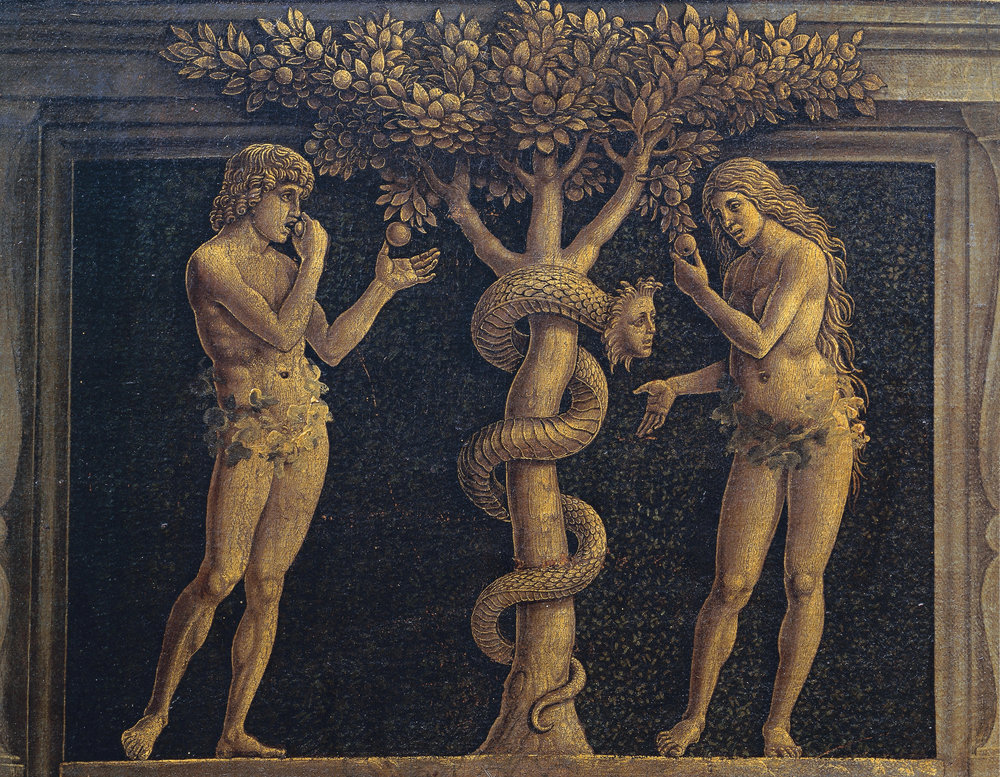
Week 5 - Principle Number 2
The Genesis of Shame - why and how is it fundamental/basic to the human experience?
Although our essential Life Force, Ground of Being, energy of Pure Love and Truth, is the infinite and only Real (meaning lasting) aspect of our being, this is experienced, if at all, as immortal, invisible, ineffable, and unknown. Who we are is not at the forefront of our attention or in our awareness and it takes a long time to recognize that it is THIS that we are. Spirit in form. Instead, what if fore and center is all that we are NOT.

For more read here - the good gold leaf cover up
“You get hit the hardest when trying to run or hide from a problem. Like the defense on a football field, putting all focus on evading only one defender is asking to be blindsided.” ~Criss Jami, Killosophy

Contemplate: Which of the buddhas is closest to their true nature in this picture? Which is furthest from awareness of their Source?
Week 6 - The Big Cover Up of Defense - Gold Leaf
Defenses
Threat (unmet need in past, in perception in the present) =
Emotion = Fear, Fear of loss of identity (shame) =
Belief attached to the feeling is an identity issue = I am bad, worthless, not good enough, unlovable, a failure, incompetent, stupid, a horrible person AND it is my fault =
Defenses or tactics to control needs and feelings, or to overpower the external threat =
Flight Fight
Externally Passive Externally Aggressive
Externally Victim Externally Perpetrator
Internally Perpetrator Internally Victim
One of the hardest, but most necessary things to do on the spiritual journey, is to see and drop the defense, even if it means choking on your words and biting your tongue. The only way to freedom is to reconnect to the suffering underneath that gave rise to defense, and own the destructiveness of defense to yourself and others as an adult.
~Lyndall Johnson
Week 6 1/2 - The Defense of Blame
“Blame is a defensive substitute for an honest examination of life that seeks guidance in our mistakes. If our hearts are attacking us or if cancer is immersing us in fantasies of death, then we should listen to these symptoms and adjust life accordingly, Rather than blame, we could respond.” ~Thomas Moore. Care of the Soul
One of the hardest, but most necessary things to do on the spiritual journey, is to see and drop the defense, even if it means choking on your words and biting your tongue. The only way to freedom is to reconnect to the suffering underneath that gave rise to defense, and own the destructiveness of defense to yourself and others as an adult.
~Lyndall Johnson

Week 7 - Principle Number 3 - Shame is not your enemy, shame is your guide: The correct relationship to shame.
“Shame corrodes the very part of us that believes we are capable of change.”
~Brene’ Brown
Most of us, throughout our lives have spent an inordinate amount of time avoiding shame, getting rid of shame, denying that shame exists. We are terrified of our shame. But the truth is that shame is an integral and fundamental aspect of our humanity. In theory, we often try to define shame as different from guilt. Literature often defines guilt as simply an understanding of wrongdoing, without making it mean something about you. While shame is defined as a feeling of wrongdoing that is attached to a MEANING or a BELIEF SYSTEM about you. So, when shame is felt, the immediate meaning we make of it is that we are wrong….and bad. But in truth, we have virtually no experience of simple guilt, and that wrongdoing is nearly always attached to a meaning we make of it. So let’s just name our shame, and get to work on figuring out how to relate to it. The truth is, no matter how hard we try, it is not going away. In fact, we need it as our guide.
For more … Read here © Charisse Lyons
Deeper Learning:
Brene Brown uses delightful humor and groundedness in discussing how to listen to our shame.

Sacred Egyptian symbol of transformation and New Life
Don’t hate your shame.
It is the alchemy of the sun
And the dung
- And the toil
Rolled altogether
That creates the
Shiny blue-green
Sacred scarab ~L Johnson

Week 7 1/2 - How do we work with Shame as Adults?
Shame is a cellular memory of how we felt when we interpreted events and experiences in childhood to mean that we were bad, wrong and not good enough. When this feeling arises - we must relate to it with grace and dignity, correcting our young perceptions and beliefs about our identity. For more … read here
Tell your inner child - she never was “bad,” or “wrong,” or “not good enough.” She was always of intrinsic value. Life is just learning and expanding … not good or bad. On the other hand using feelings to manipulate others into meeting your needs as an adult is bad, wrong behavior and must be corrected. Others are not there to soothe, indulge, pacify and empathize with the unmet needs and feelings of your past.
“I want to drag knives over my skin, just to feel something other than shame, but I'm not even brave enough for that”
~Paula Hawkins , The Girl on the Train
“The process of repair demands a re-association with the body, a commitment to dive into the body and feel today what we couldn’t feel yesterday because it was too dangerous.” ~Alexandra Katehakis, Mirror of Intimacy: Daily Reflections on Emotional and Erotic Intelligence
Compare these two statements. Which do you want - defense or freedom - what are the qualities and decisions one has to make?
https://www.youtube.com/watch?v=QMZReI2QrlQ - That I Would be Good - Alanis Morisette - get the lyrics and contemplate…

Can we be friends?
Week 8 - Interrelatedness of Feeling and Thought
Feeling and thought are integrally related, in fact are just the same thing. Emotion is an energy that is almost visible and the symptoms can be seen very clearly in the body - tears, shaking, butterflies in the tummy etc. Thought is a higher function of survival and not quite as visceral… just energetically a little higher than the dense slowness of emotion. Shame cannot be separated out from it’s meaning and the overlay of understanding, interpretation and thought that may be pre-verbal, but nonetheless a cognition. Let’s look at the core beliefs, related to the core feeling of shame.


Holy Matrimony is Spirit in relationship to Human life within

Whatever it is, the way you tell your story online can make all the difference.
Week 9 - Principle #4 - Relationship heals the split
Shoulders
A man crosses the street in rain,
stepping gently, looking two times north and south,
because his son is asleep on his shoulder.
No car must splash him.
No car drive too near to his shadow.
This man carries the world's most sensitive cargo
but he's not marked.
Nowhere does his jacket say FRAGILE,
HANDLE WITH CARE.
His ear fills up with breathing.
He hears the hum of a boy's dream
deep inside him.
We're not going to be able
to live in this world
if we're not willing to do what he's doing
with one another.
The road will only be wide.
The rain will never stop falling.
~Naomi Shihab Nye
I especially love this beautiful poem because it speaks to the masculine being tender, protective, awake, present and loving.
And I wonder about this father’s inner relationship to his own inner young soul. Is that soul asleep and protected, or awake and recognized, loved and related to with integrity, compassion and complete acceptance, even when it is rambunctious, angry, hurt, shamed, noisy, rebelliious.Is he still the loving father then?
Use this poem to deeply introspect about your relationship to the younger part of yourself and think about when you were accepted and loved, protected and nurtured, and when were you rejected, shut down and tamed by shame.
How can you be the all loving, accepting and listening parent to that part of yourself now? Can the rain stop falling in your own inner life, and can you be the sun to yourself. As so many spiritual texts tell us, the sun does not discriminate between “good” or “bad” – it merely shines, because it is the nature of the sun to shine. Is this not the nature of your own mature Self?Examine the words and concepts below and dedicate yourself to bringing the two aspects of self back together into relationship with one another. The essential you that is free of shame, needs to be in relationship with the part of you that is bound up in shame and suffering. Love needs to be brought into relationship with Shame. Look at the list and think what it would be mean to bring the opposite quality into relationship with all the shame-based qualities of human life? Reconciliation, love, forgiveness, all need to happen inside of you in relationship. Without it happening internally it can never happen internally. If you do not understand these concepts deeply, start researching them and observing how they show up in the world. Eg. what is meant by perfectionism and how is this different to creativity. What is meant by caretaking, and how is this different to caregiving? Can I bring caregiving to my caretaking self and reconcile the two, so that they become ONE in love? Sacramental Holy Union happens internally.
… the parent’s internal representative, the identification image, which serves as the watchdog of the inner life, the gatekeeper of the unconscious, the self appointed guardians scrutinizing all that happens inside the self and dispensing shame, contempt, hatred or fear as warranted. When the identification image derives from the interactions with a significant other which are based primarily on love, respect and open valuing for the self, that internal image poses no threat to the self and functions as useful inner ally whenever unforeseen events so dictate. ~Gershwin Kaufman. Shame. The Power of Caring.
Exercise: How did you internalize the parent that is judgmental and the parent that is loving? How is this still playing out in your life?

Golden Eagle -hanging out with shame-based mortal
Week 10 - Identification with your Essential Self and learning relationship with your Shame-based self
“When I look at narcissism through the vulnerability lens, I see the shame-based fear of being ordinary. I see the fear of never feeling extraordinary enough to be noticed, to be lovable, to belong, or to cultivate a sense of purpose.”
~Brené Brown, Daring Greatly: How the Courage to Be Vulnerable Transforms the Way We Live, Love, Parent, and Lead

Always at the crossroads of choice
Week 11 - A Roadmap to Gain Awareness
Every word we utter, thought we have or action we take is rooted either in unaware motivation or awareness with Love. Unawareness leads to destruction, awareness to creativity and life. Use this simple roadmap to assess yourself in all that you do and as a tool to gaining deeper awareness.
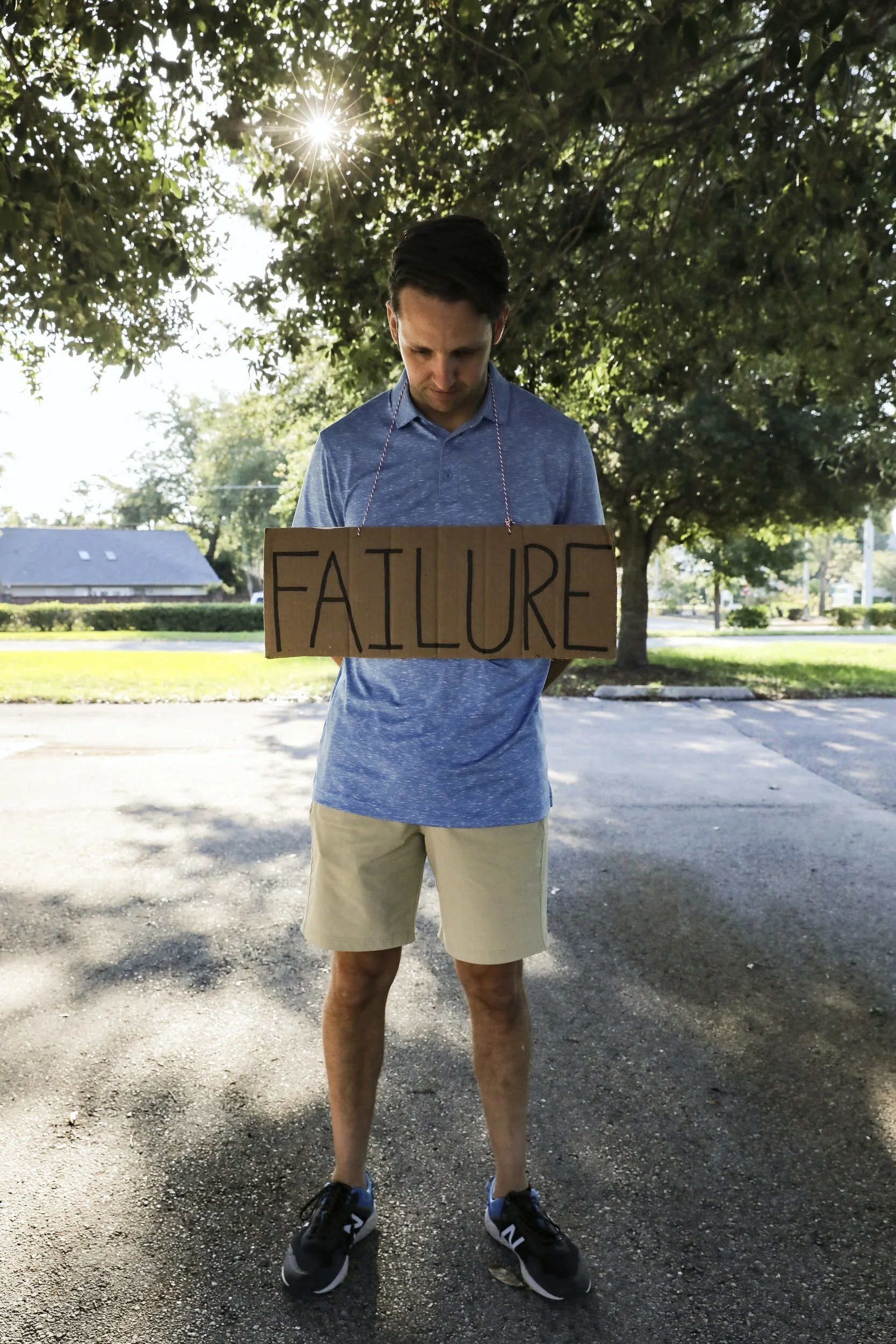
“I have been and still am a seeker, but I have ceased to question stars and books; I have begun to listen to the teaching my blood whispers to me.”
― Hermann Hesse, Demian: Die Geschichte von Emil Sinclairs Jugend

Week 12- How to make Amends with Ourselves
Many of you are very well acquainted with the 12 step programs to recovery from addiction in all it’s forms. Addiction is another word for all the defenses we have habitually used to deny, cover up, get away from, our own deep inner suffering. Our suffering, or what is referred to as suffering is not only physical pain, but the deep emotional pain of not having our needs adequately or correctly met as children by the adult figures in our lives. When needs are either overly met, or not met, or ignored and neglected, or shamed and negated, we end up feeling worthless, bad, unlovable and deeply hurt. This is theworst kind of suffering as it calls into question our very existence and identity as good and loving human- beings.
Bibliography on Shame
Beattie, Melody. Beyond Codependency and getting better all the time. First Harper & Row, Publishers, San Francisco 1989
Bradshaw, John. Healing the Shame that Binds You. Health Communications, Inc., Florida, 1988.
Branden, Nathaniel. The Power of Self Esteem.
Fossum, Merle, A. & Mason, Marilyn, J. Facing Shame. Families In Recovery. W.W. Norton & Company. New York, N.Y. 1986
Harper, James, M. & Hoopes Margaret H. Uncovering Shame. An Approach Integrating Individuals and Their Family Systems. W.W. Norton & Company. New York, N.Y. 1990.
Kaufman, Gershwin. Shame. The Power of Caring. Schenkman Books, Inc. Rochester, Vermont. 1992
Kushman, Harold, S. How Good Do We Have to Be? Little, Brown and Company. U.S.A. Ltd. 1996
Everything by Brene Brown
Movies:
The Joy Luck Club
Lost in Jonkers
Shame
Good Will Hunting