The United States of America is sitting on the edge of the precipice of destruction, with a government that no longer protects, uplifts, and guides the morality, well-being, and development of its people, but has turned in on itself and become a cancerous and erosive force of unconscious rage, shame, and fear, destroying itself and the country from within.
We hear all the time, “I don’t understand.” This suggests there is insufficient awareness of these unconscious forces within each of us, ourselves, which can affect outcomes in our personal lives.
I also hear, “I feel helpless, there is nothing I can do.” This statement again reflects a lack of awareness of the self as an integral part of a sick body. If one cell can maintain integrity in a sick body, it can heal the body. This is our responsibility – to ourselves, to our community, and to our nation.
Self-Awareness – Self-Responsibility – Self-Love
And to quote Obama – “Yes, we can.” The backlash to his presidency as a Black man is “No, you can’t.” “Yes and No” is truly a spiritual war that rages within each of us. And we have to choose moment by moment what we say “Yes,” and what we say “No.”
Let’s come together to become aware and fulfill the vision of hope Obama gave us – individually and collectively.
Why Ordinary People Need to Understand Power
https://www.ted.com/talks/eric_liu_how_to_understand_power
Lesson One - Definitions
"Every attempt to control another is an act of violence" ~Auberon Herbert
Politics of Power: When I refer to the Politics of Power, I am talking about the use of power over other people; I am not referring to internal empowerment, but rather to internal disempowerment. From this disempowered place, we have all learned tactics of power over others to get them to meet unconscious needs and tend to our fragile feelings, which have their source and origin in a disabled and disempowered psyche, stemming from childhood trauma and dysfunction.
Politics of Control: To use the politics of power is to admit that you have a lack of inner power to meet your own needs, cannot esteem yourself, love yourself, or relate to yourself in some way that is nurturing, intimate, and aware. In fact, as you attempt to coerce, change, or cajole others into caring for your feelings and needs, you are at the same time using control tactics to repress knowledge of how you feel and what you need. This means you are disempowered to meet your own needs or care about your own feelings. Consider this definition in terms of the current presidency. What hidden trauma would it require to try to coerce the whole world to prove to you that you are important, valued, powerful? How very unimportant, devalued, unloved, and helpless must one be to psychologically transfer all these needs onto the rich and powerful “daddies of the world?” How psychologically traumatized, rageful, and humiliated must one be to transfer these feelings onto anyone who does not meet the unconscious needs? You will not and cannot understand until you know this within yourselves. How often do you expect someone else to be the “good parent” that meets your every need? How do you “love” people who meet your every need? How rageful and rejecting do you become when old feelings of inadequacy, worthlessness, and unlovability arise in you? How do you blame others for those childhood traumas? Come to class prepared to share an example of how this dynamic has been alive in you over the past month.
Pause for a moment and see if you can find a place within you of helplessness, powerlessness, shame, and fear that has led you to use tactics to coerce others into giving you what you want and think you need. If you have done any inner work, you will quickly recognize that your power tactics, manipulations, coercions, and attempts to win people over, impress people, advise people, help people, give to people, make promises to people, etc., all stem from a deep need for them to like you, praise you, love you, or value you. If you can find this in yourself, then you can surely recognize it in politicians whose whole career is a study of tactics to win over others, what they think they need. The political scene is not populated by enlightened saints. They use the same tactics of power and control that we all do. Their promises are hollow and meant only to have you fulfill their own hidden needs. Unless we see it in ourselves, we will never recognize it in them, and so we will get the leaders that reflect our own level of awareness.
Unconscious feelings or fear and shame lead to control tactics to repress these feelings from awareness, which leads to passive, victim behavior in an adult. To constantly repress, deny, attack, and reject our feelings and needs is an act of aggression against ourselves. In other words, our functioning is, in unawareness, various tactics of external power mongering and internal control.
Rage: The underlying feeling behind using power tactics against others is the belief that your need is not being met. Rage leads to overpowering and disempowering others in a desperate and vain attempt to get them to give you what you want or need. The angriest and most rageful people are those who try to get others to love and value them by pleasing them. If you do not meet the need, you will meet the full force of this deep, unconscious, repressed rage. The control tactics of manipulation then turn to overt rage and forceful power against you.
Under the rage is the deep shame and pain, fear, and humiliation of not having some need met when you needed the external world to meet the need as a helpless child who could not yet meet their own needs. When the need was not met, it left you feeling helpless, abandoned, hurt, shamed, and afraid, and then angry and rageful, leading to a life of politics in power and control, instead of a relationship. intimacy and connection.
Power:
Aggressive, shaming action and thought against others to ensure they meet your unconscious internal childhood needs.
Control:
Passive internal defensive thought and action to repress needs and feelings to ensure you meet the needs of the external person demanding that their needs be met by you and their feelings are taken care of by you.
Politics: (AI overview)
Politics is the set of activities and ideas related to governing a country or area, the process of gaining and using power within a group, or the study of political systems. It encompasses the actions of governments and lawmakers, political opinions, and the strategies people use to influence decisions or achieve power, whether at a national level or within a workplace.
Different aspects of politics, which are about external power and control tactics:
Government and governance:
This involves the activities of governments, lawmakers, and those who influence the way a country is run - in other words, what others have to do, which can be moral or immoral depending on the regime in power
Power and influence:
Politics can also refer to the process of getting and keeping power within any group or organization, not just the government. This includes the use of political methods, tactics, and sometimes unprincipled strategies. In other words, what needs to be done to maintain the power to tell others what to do and how to do it.
Study of political systems:
At a university level, politics is the academic field of "political science," which studies political systems and power.
Workplace politics:
This term refers to the activities involved in gaining or retaining power within a specific company or organization.
Political opinions:
In the plural, "politics" can refer to an individual's political opinions, principles, or party affiliations.
Study and Practice
Unless this teaching of knowledge becomes gnosis (deep inner knowing through spiritual practices that bring the unconscious (shadow) to awareness), meaning stopping the use of defenses and allowing awareness to shine, the world will remain the same. Knowledge without personal awareness and application does nothing to change oneself, anyone else, or the world.
So, to aid your practice, I suggest deep meditation, journaling, and discussion with others on the following questions. Come to the first class ready to discuss and engage in the conversation. Remember, the more you wonder and ask questions, the sooner the awareness and change within happen.
What were the politics of power and control in your family of origin?
Who had the most external power, the least external power?
Who had the least external power?
What was the internal effect on each person?
How was power used over you?
How did you learn to use power?
What gives you a feeling of power, in control, superiority, goodness?
How did you learn to comply, and why?
How did you learn to make others comply with your will, and why?
How did you feel superior? Inferior?
What would happen if you challenged the power structures?
What tactics did you learn to repress your own feelings and needs and focus on the needs and feelings of others with more power?
How did you turn against yourself with power so as to control your own feelings and needs?
What was your role in your family of origin?
What were the rules governing the politics of power and control?
Did you feel loved? Or did you have to earn love and feel fear if you did not meet your parents’ needs or obey their demands?
What is the difference between meeting a need and obeying an external expectation?
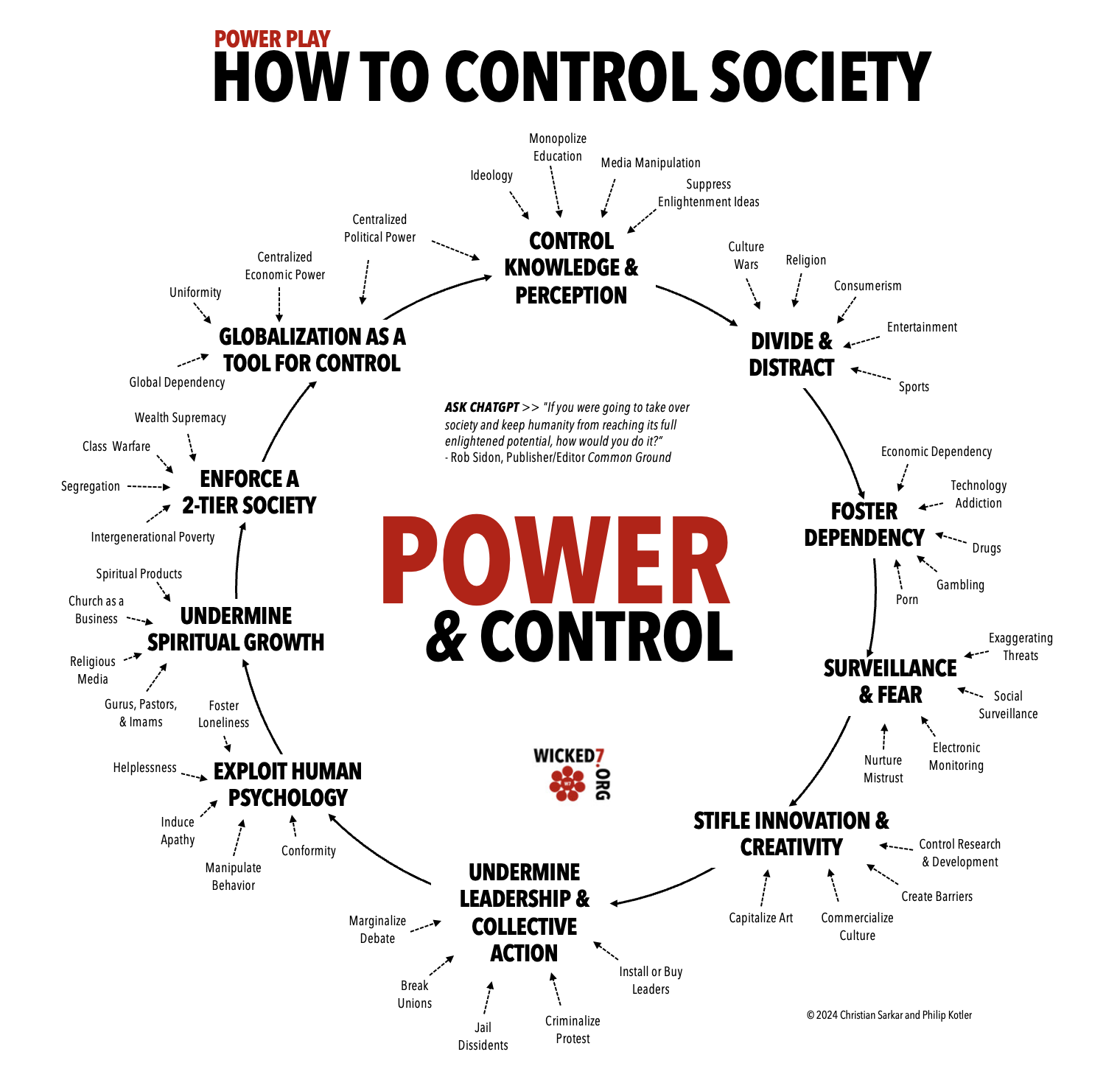
Draw a picture of the system that represents the politics of power and control.
https://www.mkgandhi.org/nonviolence/g_non.php
This is a good introduction to understanding the motives and consequences of using violence, coercion, and power over others. Start studying the writings of the greatest leaders in the world, and what motivated them, and what did their teachings and leadership result in?
Lesson Four - Paradigm One in Detail - Personal Relationships
America today:
AI Overview
In the U.S., millions of people experience domestic violence annually, with approximately 41% of women and 26% of men having experienced physical violence, sexual violence, or stalking by an intimate partner in their lifetime.
Annually, over 10 million people are affected by intimate partner violence. Victims can experience severe injuries or death, and data suggests that about one in five homicide victims are killed by an intimate partner.
Lifetime prevalence
Women: About 41% have experienced contact sexual violence, physical violence, or stalking by an intimate partner in their lifetime.
Men: About 26% of men have experienced contact sexual violence, physical violence, or stalking by an intimate partner in their lifetime.
Stalking: About 1 in 6 women and 1 in 19 men have experienced stalking in their lifetime, most often by someone they know.
Annual occurrence
Overall: Over 10 million people experience intimate partner violence each year.
Women: An estimated 5 million acts of domestic violence are perpetrated against women 18 and older annually.
Men: Approximately 3 million acts of domestic violence are perpetrated against men annually.
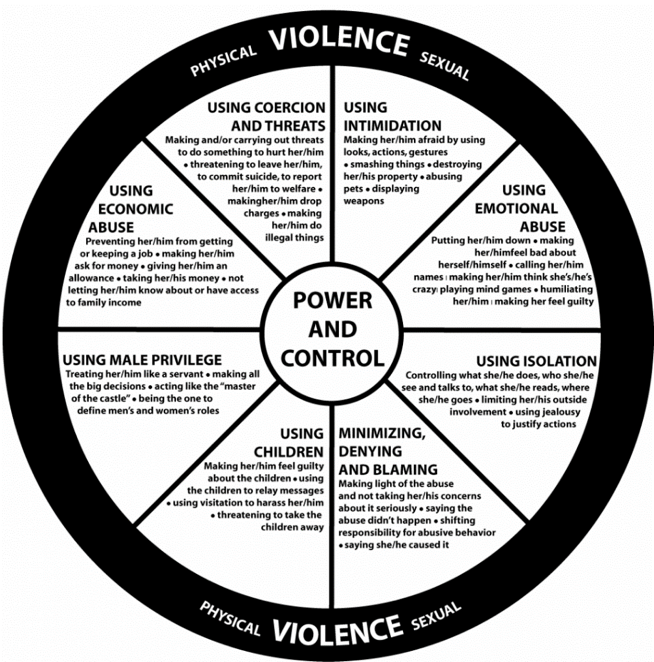
It is important to recognize that the statistics reveal the tip of the iceberg - they only reflect reported incidents. The truth is that for the last 40 years of being a therapist in America, I have heard daily the myriad ways in which people use power and control tactics in their personal relationships. This is not only an American problem. It is a universal human dilemma. How we all lead and conduct our relationships is reflected in the rise of leaders who reflect this societal reality. Again, it is not about the degree, intensity, or frequency with which power and control occur; it is about recognizing the reasons why we act as either a perpetrator of power and control tactics or find ourselves helpless victims of other people’s power and control tactics. How are each of us complicit in living in Paradigm One? How committed are we to expansion and growth to live in a different paradigm of equality, mutuality, love, reciprocity, respect, and love?
Exercise:
Study the Power and Control Wheel and consider all the little ways you live in this paradigm. Then analyze incidents by using some everyday examples in your own experience:
What do I experience as a threat, even when there is no realistic threat?
What need do I have that I think someone is not meeting? Why do I believe they should?
What feelings are activated from childhood as a result of this perception?
What were the original experience/experiences that resulted in big feelings?
What did I learn to think and believe about myself?
What tactics did I learn to try to get others to meet my needs and care about my feelings, because I do not yet know how to do this myself?
What tactics am I currently using to try to make other people like, love, and value me because I cannot yet do so myself?
How do I do violence to myself and others? How am I myself a terrorist against the child within me? Do I hate the child within? Am I irritable, impatient, dismissive of my feelings and needs (the child)? How is this different from the horrific gun violence against children? Surely the societal problem is merely a reflection of the adult hatred of the emotions and needs of the inner child. It is the same, in principle, if not in the extremism of the actions of those unfortunate humans that have no awareness of their murderous rage towards their own inner vulnerable and hurt child, projected out onto the world, recreating the same revolving scenario from generation to generation.
Recommended Reading
Broken Toys, Broken Dreams - Terry Kellogg
Study the pages that outline boundary violations, all of which are more subtle tactics of power and control, very often considered “normal,” because this level of dysfunction is the norm.
Lesson Five - Summary of the Two Paradigms Representing Two Stages of Human Development
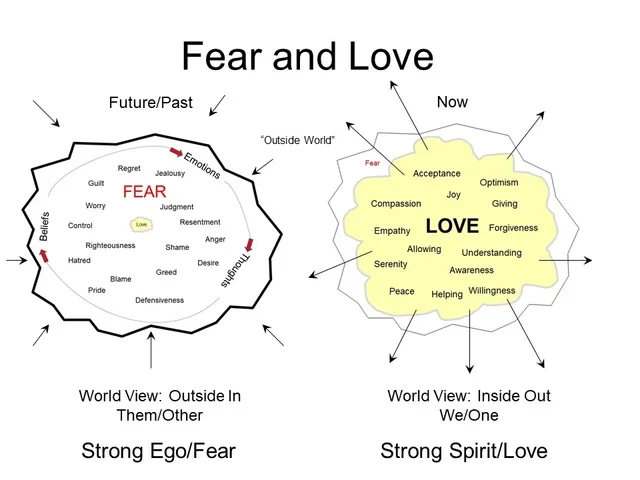
Paradigm One, in summary, is the function of the unaware ego. Unawareness of the motive of feelings of shame, fear, and rage, and unawareness of the inner need that cannot yet be met internally. This stage results in the deployment of all tactics of power and control, i.e., defenses.
Paradigm Two, in summary, is the Self awakened and aware of the function of the ego, how it formed, and fully in charge of when it is used to the benefit of self AND other. Knowing oneself as Consciousness, i.e., awareness without the addition of thought, feeling, need, or defense, is Love.
What emanates from love is, by definition, loving for oneself and others. When love is blocked by ego, it is not loving to self or other.
See chart 1
[See chart 2](/s/Different
~ Languages-SoulEgo.doc)
Exercise:
Journal each night about the power and control tactics you used during the day that do not reflect the love of who you are. Analyze why and how you were unaware of the thought or tactic you used.
Lesson Six -Why Ordinary People Need to Understand Power
https://www.ted.com/talks/eric_liu_how_to_understand_power
Knowing, understanding, and using power to lead, teach, and guide others is an essential part of public and humanitarian service to the world. Every human is part of systems of hierarchy and rank, in which, by comparison to others, they have authority, knowledge, status, social standing, education, wealth, privilege, etc. of some kind. This is an immutable law of living in a creation of difference, complexity, and diversity. There is nothing inherently wrong with this. However, when rank is misused due to Power and Control issues, it becomes a misuse of rank and power. When someone of a higher rank uses power and control tactics against someone of a lower rank, it is a misuse of the rank and the responsibilities it entails. This is why the higher someone's rank, the greater the responsibility to be aware of unconscious motivations and to remain enlightened, not fall into the myriad ways rank can be abused by power and control tactics. It requires immense awareness and presence to use rank in a mutual, respectful, and interdependent way. However, mutuality and respect do not mean that there is no longer any rank – there is just greater responsibility coming from a clear and loving heart and mind.
The greatest abuse of Rank is by those in positions of spiritual power. To have spiritual rank and then use power and control tactics rooted in personal unawareness constitutes spiritual abuse – and there can be no worse abuse. So, the higher the rank, the worse the abuse. The greater the discrepancy in rank, the greater the harm when power and control are used. So clearly, people who have been accorded great rank bear great responsibility to be aware, to act with respect, not to threaten or disempower others.
We do not want to use power in unawareness but in full awareness. Power is not a dirty word when it comes from a place of valuing life, valuing humans, valuing equality, reciprocity, and mutuality - paradigm two. Empowerment can only happen when there is a deep understanding of the misuse of power within ourselves and against others. Does our power come from the deep, unaware pits of dark, unaware shame and fear that serve only self, or does our power come from a place of clarity, understanding, care, and connection, the good of all?
How can we recognize the difference between an empowered choice and the use of power over people to force them do what we want and think is right, based on unconscious feelings and needs? Again, we start with ourselves. We start to investigate our own hidden motives, or we will never recognize the motives of others and will be led into treachery of one kind or another.
Empowerment
An empowered person is someone who acts from a place of freedom from unconscious ego, with awareness, from the core of their true, loving, and wise nature, with clarity and certainty that has no arrogance or false humility. Although the behaviors might be the same as those exhibited by people acting defensively, the behavior is not defensive but is in the best interests of all involved. Aggression becomes assertion, control becomes firm limit setting, and pretense becomes authenticity. There is no relinquishing of rank but the fullness of embracing rank and authority, identity, presence, leadership, and taking one’s rightful place in community with humility, service, and the power of love, which has all the power of creation rather than destruction. This is the power that remains once the power of fear has been relinquished.
“Anger is just anger. It isn't good. It isn't bad. It just is. What you do with it is what matters. It's like anything else. You can use it to build or to destroy. You just have to make the choice."
Constructive anger," the demon said, her voice dripping sarcasm.
Also known as passion," I said quietly. "Passion has overthrown tyrants and freed prisoners and slaves. Passion has brought justice where there was savagery. Passion has created freedom where there was nothing but fear. Passion has helped souls rise from the ashes of their horrible lives and build something better, stronger, more beautiful.” ~Jim Butcher, White Night
See the diagram of Power here
Lesson Seven - Learning to Control Anger and be Internally Empowered - Part 1
“Anger ... it's a paralyzing emotion ... you can't get anything done. People sort of think it's an interesting, passionate, and igniting feeling — I don't think it's any of that — it's helpless ... it's absence of control — and I need all of my skills, all of the control, all of my powers ... and anger doesn't provide any of that — I have no use for it whatsoever."
[Interview with CBS radio host Don Swaim, September 15, 1987.]” ~Toni Morrison
Anger is the hallmark of Paradigm One; however, very few people can identify this feeling. It has been suppressed and repressed, dumbed down and muted out of awareness through numerous defensive tactics. Instead of being able to identify and name our anger, it is acted out sideways in endless acts of mini aggressions, all socially sanctioned as normal. Judgment direct or indirect, as in trying to change other people by giving them advice not asked for, helping them, rewarding them for doing what you think is “right,” punishing them for doing what you think is “wrong,” superiority, blame, criticism, self-righteousness, pouting and sulking when others do not meet your needs, withdrawing affection, the silent treatment, gossip, forming alliances against someone in judgment, sarcasm, snide remarks… and on and on. This is anger. It is justified—self-righteous anger. And yet, all that it is is the myriad ways in which you have been treated, have internalized the dynamic, and the way you now treat yourself if you ever move outside of what is “good, right, and perfect,” according to the mores of your upbringing. At an unconscious level, you are now the moral watchdog for yourself and everyone else, and you feel you have the right to overpower, change, and aggress against others in the same way you do to yourself. This is an explanation of the psychological term ‘projection’.
This does not even begin to address the thousands of hateful ways in which people are aggressive in rage against others in overt and violent ways. However, as I said earlier, it is not a matter of degree, frequency, or intensity; it is a matter of principle. And the only solution to the issue is an empathetic and understanding awareness of the difficulty of not acting like a knowledgeable animal and becoming human instead.
“Anger is like flowing water; there's nothing wrong with it as long as you let it flow. Hate is like stagnant water; anger that you denied yourself the freedom to feel, the freedom to flow; water that you gathered in one place and left to forget. Stagnant water becomes dirty, stinky, disease-ridden, poisonous, deadly; that is your hate. On flowing water travels little paper boats; paper boats of forgiveness. Allow yourself to feel anger, allow your waters to flow, along with all the paper boats of forgiveness. Be human.”
~ C. JoyBell C.*
So, assuming you wish this for yourself - to stop being reactive, unaware, and living in intelligent instinct and ego defense, and desire to become human, let’s explore how to do that:
Recognizing and Identifying Anger and Rage
Start noticing all the times you use “rage words” of one degree or another: mad, annoyed, pissed off, irritated, indignant, resentful, bitter, hostile… what is your favorite word?
Recognizing Projection
Now ask yourself, “Why?” Usually, you will immediately answer, “Because that person did …. did not do…” Notice this. See how you are projecting (blaming) and are primed to use power-and-control tactics on that person.
Notice Resistance and Rationalization
When challenged by the idea of projection, you might find yourself objecting, “Yes, but does that mean that what the other person did is okay?” No, of course not. It means that what your business is is your own inner response to this. Will you be an unaware, reactive victim or a perpetrator in response to the other person, or will you use the opportunity to know yourself and find a way to meet your own need for safety, love, value, and belonging? This might mean setting a limit with someone, but it would not be out of anger. It would be from a deep knowing of what is in your best interests and theirs as well. It is never loving to not insist on limits on what is not loving towards you internally and externally. The idea that something must change outside of you to be at peace, happy, or fulfilled is a false belief and a dead end. This belief must be corrected, and a limit must be set on old patterns of belief. This idea must be replaced with the idea that you are not dependent on other people. You are fully responsible for your own feelings, needs, beliefs, and behaviors, and this is the only thing that is within your control.
“I want to say somewhere: I've tried to be forgiving. And yet. There were times in my life, whole years, when anger got the better of me. Ugliness turned me inside out. There was a certain satisfaction in bitterness. I courted it. It was standing outside, and I invited it in.”
~ ****Nicole Krauss, ***[***The History of Love***](https://www.goodreads.com/work/quotes/1882970)
After Resistance, a Deep Investigation
Once you have settled down by correcting your inner belief system about others changing, then it is time to go internal and do the inner work. We must know how to do it. What are the questions to ask oneself to go deeper and deeper? Remember, the deeper the roots of awareness, the greater the tree’s growth. To grow, we must tap deep underground resources. Water and nutrients are underground, not above ground. We must be connected to the Great Spiritual Mother of us all and her inner guidance in what is loving and true and leads to growth - the very water of life, and drink from her deeply.
The Right Container
As an expression and creation of the Great Mother, you, too, are essentially consciousness. Consciousness, which is the infinite energies of Love and Truth, is the container for everything that is created - all the thoughts, feelings, perceptions, needs, and behaviors you have generated are held within the container of your own consciousness. What images come to mind as you meditate on this concept? What is your experience of this state of being in your body? As an expression and creation of the Great Mother, your very DNA is formed through consciousness. Consciousness, which is the infinite energies of Love and Truth, is the container for all that is created - all the thoughts, feelings, perceptions, needs, and behaviors that you choose are held within the container of your own consciousness. What is the experience of this state of being in your body? Once you can see that the small cluster of perception, leading to feeling, thought, need, and behavior, is infinitesimal in relationship to the container in which it is held, you will find the courage for the next step.
Relationship
What would the relationship between Infinite Consciousness within be with the external manifestations of thought, feeling, need, and behavior look like? This is an important question. Our first gods were our parents, and they were the embodiment for us, as small children, of what is good and loving, and yet, how they related to us was very often everything but loving or authentic to their own state of being. Most of us reach adulthood confused about what love is. We, in fact, have no idea how to relate to our own inner experiences other than through what was given to us in relationship and what we received from our parents. We call punishment and reward love. We call helping and controlling love. We call it interfering and advise giving love. We call gossiping about others and eliciting alliances against others loving. We harass, judge, and criticize, “for our own good and the good of others.” We do not even know how to be empathetic to ourselves, let alone loving, because we have never been taught to honor and respect our own feelings, needs, and thoughts. The very first step in learning to have an empathic relationship with ourselves is:
To listen, observe, notice, enquire, and show interest in what is happening within ourselves.
To the extent that we were listened to, noticed, and our thoughts, feelings, and needs were received with interest in us as children, is the extent to which we will have introjected that dynamic and learned to do it for ourselves.
To notice the immediate thought reaction to what you hear, see, and observe. Notice if it is judgment, criticism, or some form of disgusted response to
what you see, hear, and observe.
All these responses are rage, anger, dismissal, and the use of force against a child. This is the internalized parental response you received as a child. This is not love. This is not YOU. This is to meet inner rage with rage, and we cannot solve the problem from the same level at which it was created. You cannot make war to end war. You cannot meet rage with rage and think it will lead to inner or outer peace. To observe our inner rage with equanimity is the first step in learning to love ourselves and the hardest step of all.
Change the inner belief that long-term change happens through fear tactics of rage, punishment, shaming, rejection, criticism, or judgment. It does not. Only awareness can bring long-term change. Remind yourself of this repeatedly until the urge to be hatefully reactive toward yourself changes to curiosity about WHY you behave the way you do, and you are willing to dive deeply into the historical reasons for your patterned reactivity.
Lesson 8 - Learning to Control Anger and be Internally Empowered - Part 2
“Incredible change happens in your life when you decide to take control of what you do have power over instead of craving control over what you don't.” ~Steve Maraboli, Life, the Truth, and Being Free
“Most misunderstandings in the world could be avoided if people would simply take the time to ask, ‘What else could this mean?”
~ Shannon L. Alder***
A Deep Investigation - Key points to internalize
The hidden roots of rage, anger, irritation, annoyance, being pissed off, are SHAME
~ ALWAYS SHAME.
It is impossible to go any further in our investigation until we ask ourselves the simple question: “How am I making this external event mean something about my identity? How am I agreeing with the message of the external event that I am somehow wrong, bad, unlovable, imperfect, and worthy only of revenge, abuse, judgment, criticism, and punishment? Without this deep, hidden belief and feeling, there would be no angry reactivity, only curiosity and a desire to understand what is occurring to protect oneself and understand the other person. Essentially, your rage is protecting you from knowing about the hidden shame. You abandon that feeling and belief by rising above it in anger, then projectile-vomiting it onto others. To be aware of this dynamic is the start of self-empowerment.
The deeper and more unaware the shame, the more intense the shame, the quicker and more intense the anger response will be. It will seem as if the anger is instantaneous. Think of your anger as measured on a thermometer. Right now, draw a thermometer and calibrate it from 1 - 10 using your own words and colors to indicate the progression of the feelings. It is important to be aware of the subtler feelings before 4 on the thermometer.
Once your feelings reach a 4 on your anger thermometer, it is unlikely you will not act out aggressively, somewhere on the spectrum from sarcasm to physical violence. The power of shame and rage has the potency of a two-year-old temper tantrum, because it all started before age 6.
Anger becomes a habituated pattern of response. Think about how this occurred in your life and why? How did you learn it? How do you get your way using your anger to intimidate others? There is always a cause and effect. There is always a hidden need and a want. There is always a big feeling of fear or shame. There is always immediate gratification, release, and reward. What are they?
How were anger and power, and control tactics, a part of the society you grew up in, normalized in family life, and condoned in schooling?
What are the beliefs and values you learned around the use of force, shows of aggression, and external power? How do you feel when you see the “bad guy” getting so-called” justice”? How do you think “bad people” deserve punishment? How are these beliefs gender normed? What did you learn about being a “real man” and a desirable woman?
What emotional needs do you still insist others meet for you? Can you see the connection between others not meeting your inner needs and the rage, power, and control you then use within and without?
Decide right now, “Anything is better than expressing aggression and violence. If you find resistance to this statement, write the argument down and see if you can speak directly to it and form a relationship with the part of you that still wants to hold on to power and control over others.
Decide right now, “Anything is better than allowing others to express aggression and violence against me, except using aggression and violence myself.
Watch the movie “Dead Man Walking.” Get together as a group to discuss the feelings and programmed beliefs that are portrayed in this movie. How are the two paradigms represented within the different players in the movie? How do you feel about the death penalty being reintroduced for pedophiles in Florida? What do you think should be the state’s policy against offenders of violence? Can violence on violence ever result in peace?
What are your triggers? Be aware of the patterns.
External actions of others, external situations
Unmet needs (by others and self)
Self-talk and meaning-making
Unexamined assumptions and beliefs, judgments, and misattribution of blame - personal and societal
Internal feelings resulting from the above
FOR WARMTH
I hold my face between my hands.
No, I am not crying. I hold my face between my hands to keep my loneliness warm — two hands protecting, two hands nourishing, two hands to prevent my soul from leaving me in anger
Lesson 9 - Let’s Practice More
"Mastering others is strength, mastering yourself is true power."
~ Lao Tzu
When have you felt rage, anger, irritation, or annoyance? Judgment (as opposed to discernment) is anger masked by thought.
Remember a time in childhood when you “lost it.” What happened?
Remember a time in adulthood when you “lost it.” What happened? – What judgments did you have of yourself and the other?
Write out the first story, then tell it to someone using the sequence below. Remember that anger is a defense against a threat of some kind – a threat when the external world is not meeting our universal human needs, either realistically or in perception.
What was the need you perceived was not being met? What was the threat to your integrity and True Identity (Soul Self)?
What did you immediately feel, before you distanced yourself from the feeling by using your thinking to produce anger? This happens in a split second. Slow the sequence down to find the feeling in your body.
What thinking or pre-cognition (perception) created the anger?
How did you act out? Where did you direct your anger? Self-blame or other blame?
How did you act in, which is still really acting out the anger? (Either way, you are distancing yourself from the primary feeling)
How did you generalize your anger?
If you generalized your anger, which group of people do you hate the most?
Finish the sentence, I hate people (who are just like me) when they ….Examine carefully how this is how you hate yourself, and blame yourself, but do not wish to see this projection of your self-hatred/shame onto others?
How do we deal with anger?
Feel it and do not act on it. Do not direct it anywhere – either towards yourself or someone else. Have the courage to just sit with anger, accept it, hold it, and sink deeply into it until you can find the underlying emotion or feeling?
This is the SPIRITUAL DANGER:
to repress anger with cultural beliefs you have heard, like “anger only hurts you,” or “anger is wrong, and enlightened people do not get angry.”
to act out your anger through self-justification, blaming, rationalizing, denying real feelings, offering explanations, and making excuses – see the complete list below under the childish ideas of “protection.”
What triggered it? How does it relate to the story above?
What need was not met for you as a child?
How did it make you feel, really?
What happened when you got mad as a child? Was there a cost or a benefit?
How has this informed the rest of your life in relating to yourself and others?
Can you bring some empathy, kindness, or compassion to this past experience and feeling?
Practice not externalizing anger. In other words, stay completely present to your anger until you have come to the full awareness of the sequence and can find compassion.
This IS the new SPIRITUAL PRACTICE:
Stay in and with your anger until it is transformed to compassion for you and others through deep examination and exploration using the above guidelines.
Compassion may be externalized on others and self, NOT anger.
Setting limits is a part of compassion.
Let’s look at some of the ways we thought we could protect ourselves using anger as children – these all represent 5/6-year-old behaviors that we become fixated on if we were not parented lovingly in a way that brings awareness and emotional growth. All these behaviors emanate from the lack of awareness of the child’s developing ego in attempting to get its needs met
“I’m the king of the castle, and you’re the dirty rascal.”
If you do not give me what I need, I will put you down and elevate myself.
I will blame you and exonerate myself.
I will be self-righteous, haughty, or arrogant, and I will blame you to make you bad and me good.
I will have no empathy for you and live in self-pity.
I will grab what I want at your expense.
I will fantasize about getting everything I want to prove I am king and have power.
I will grab power over others in any way I can, intellectually, emotionally, physically, and spiritually.
I will generalize my experience with one to whole groups of people who might pose the same threat, in my mind.
I will demand you meet my needs for attention, compliance, value, and love by terrorizing you, blackmailing you, taking from you, exploiting you, and the environment.
I will bargain with you with the implicit understanding that if I do something for you, you will meet my needs.
I will watch carefully what your need is and meet it seemingly innocently with the implicit and not understood understanding that you will watch for what I need carefully, and then if you do not meet it, I will be justified in being angry
I will rationalize, intellectualize, and excuse my persecution of you and be smug about it.
Demand to be treated as special, superior, and important. Act entitled.
Demand attention, admiration, and compliance to your wishes – learn to get this by fulfilling roles and achieving highly, or throwing tantrums, whining, etc.
Being envious, jealous, and plotting to get what others have.
Idealizing/devaluing yourself and/or others in all kinds of combinations
Lying, exaggerating, creating stories to boost yourself, or avoiding shame.
Be obsessed with comparisons about beauty, money, fame, success, achievement, and all external societal measures of success.
Judge and compare self and others – conversation is full of “I can’t believe,” or “Can you believe….”
Being good, right, and perfect to boost self-righteousness and put others down...
“Having an ‘I don’t care attitude. Isolating and withdrawing from ‘shitty, other people.”
This list is just a brief sampling – watch yourself this week and notice what else you could add to the list. Notice all victim-perpetrator behavior – it's all filled with anger.
SPIRITUAL EXERCISE:
Be deliberate, intentional, and mindful in noticing these behaviors in yourself and others and finding a way to set limits with compassion. This does not mean finding the right technique, words, or skill. It will require you to do some deep introspection. Examine this excerpt from David Kanigan’s blog – what is he needing? What is the “dandy” needing? Can you find compassion for both? What do you imagine their childhood story might be? This is a great blog, by the way!
“I’m sitting at the gate. 6 am.
Slumped in the seat, I unstrap the day-to-moment: alarm, bleary-eyed 4 am shower, the pack-up, the last once-over of the room, the tip for the cleaning lady, the hotel checkout including erasure of the $18.95 wifi overcharge, tip for the bellman, cab, boarding pass, security and of course, the slow march down the corridor with the bag. The bloody bag, wheels now up, exhausted from the trek, is resting peacefully.
Sigh. It’s ok.
I twist in the ear buds, find Today’s Chill playlist, and turn inward, deep into the Head.
30 minutes till boarding.
There’s a stir in the waiting area. Ladies chattering.
Hair gelled and swept back. Fitted black sport coat. White starched shirt. Skinny black tie. Slim fit, boot cut, stone-washed jeans. European-style boots, fine polish. Accessorized with a smart brown leather case, Louis Vuitton-like with a fancy French handle like Porte-Documents Jour. As he passes by check-in, there’s a whiff of Tom Ford Oud Wood Eau de Parfum, which fills the waiting area with its rosewood, cardamom, and tonka bean alchemy. Ladies swoon, now fully under the spell.
He takes the empty seat next to me and sets the Porte
~ Documents Jour* neatly on his lap.
I slide my bag under the seat, out of sight. Jesus. Mr. Dandy had to sit here?
I close my eyes. Shift in my seat. Can’t find a sweet spot, this seat cushion where 53 million travelers sat before me. Ass to manufactured steel. I shift uncomfortably.
Mr. Dandy sits with his hands cupped one over the other on top of his Porte-Document Jour. No ear buds. No books. Just sitting peacefully, absorbing the adoring lights on him, and oblivious to CNN blasting from the monitor overhead about Trump’s tweets, flooding in California, and a Man who was told he was fat actually having a 130-pound tumor.
Sigh. It’s not ok. Really.
Down 15 lbs., there have been casualties. Jacket is oversized, cuffs below wrist, sleeves invisible. Shoes, scuffed, dusty, and oversized, callouses forming on baby toes, left and right. Belt synched up on pants to hold them up, waist band bunching up front – sweatpants really, not fitting as relaxed-fit Chinos were designed – and all nicely rumpled from a bad fold job. The shirt would fit a thick-necked wrestler, but on me, it pooched in the front, and the tail was untucked in the back. Underwear, black gotchees, hanging loosely. Socks, over-the-calf, somehow too tight, pinching legs. Unshaven, with a 2-day bristle, but nothing cool about the sharp, grey-black, splotchy stubble rounding out the ensemble. Oh, let’s not forget the Old Spice (Old Man) deodorant and a splash of something akin to pungent, sticky, insect repellent.
The attendant makes the boarding call. Dandy stands and walks to the gate, all eyes locked on.
I sit up, tuck in my shirt tail, thinking that will clean this up, and drag my carry-on, which has awakened with its wailing. Wow, what a fing mess.
Melvv cues up on my Favorites with “Not Me“:
I keep falling down when I stand on my feet. I feel like a clown when I say what I mean
Screw it. Let it all go. A middle-aged man is going sagging. Really, like who cares?
Take off the belt, let the pants sag, let the black gotchees and cracks hang out. Going Street.
Like who cares, right?” ~ David Kanigan
“Anger ... it's a paralyzing emotion ... you can't get anything done. People sort of think it's an interesting, passionate, and igniting feeling — I don't think it's any of that — it's helpless ... it's absence of control — and I need all of my skills, all of the control, all of my powers ... and anger doesn't provide any of that — I have no use for it whatsoever."
Lesson 10 - Vision for the Future
Study the Mutuality and Equality Wheel. Can you get a vision for all your own interactions within your own being, fit the wheel? It requires a demand to always consider each part of yourself’s needs, feelings, thinking, and beliefs, acceptance, understanding, and empathy, as well as limits with less evolved younger ways of understanding the world. Until you achieve this internally, you will only fake it externally or fail altogether. Make it a practice to consider every decision you make - was it internally negotiated and agreed upon, or do you summarily make decisions that leave other parts of your life feeling controlled, depressed, and unloved? Are you repeating internally the way you were treated externally as children? This is deep inner work, requiring constant mindfulness and attention in every interaction throughout the day. Each section of the pie needs to be internalized and lived internally, for the possibility of external relationships that reflect this inner reality.
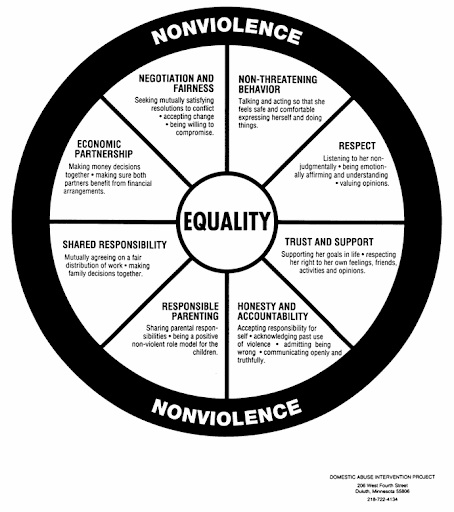
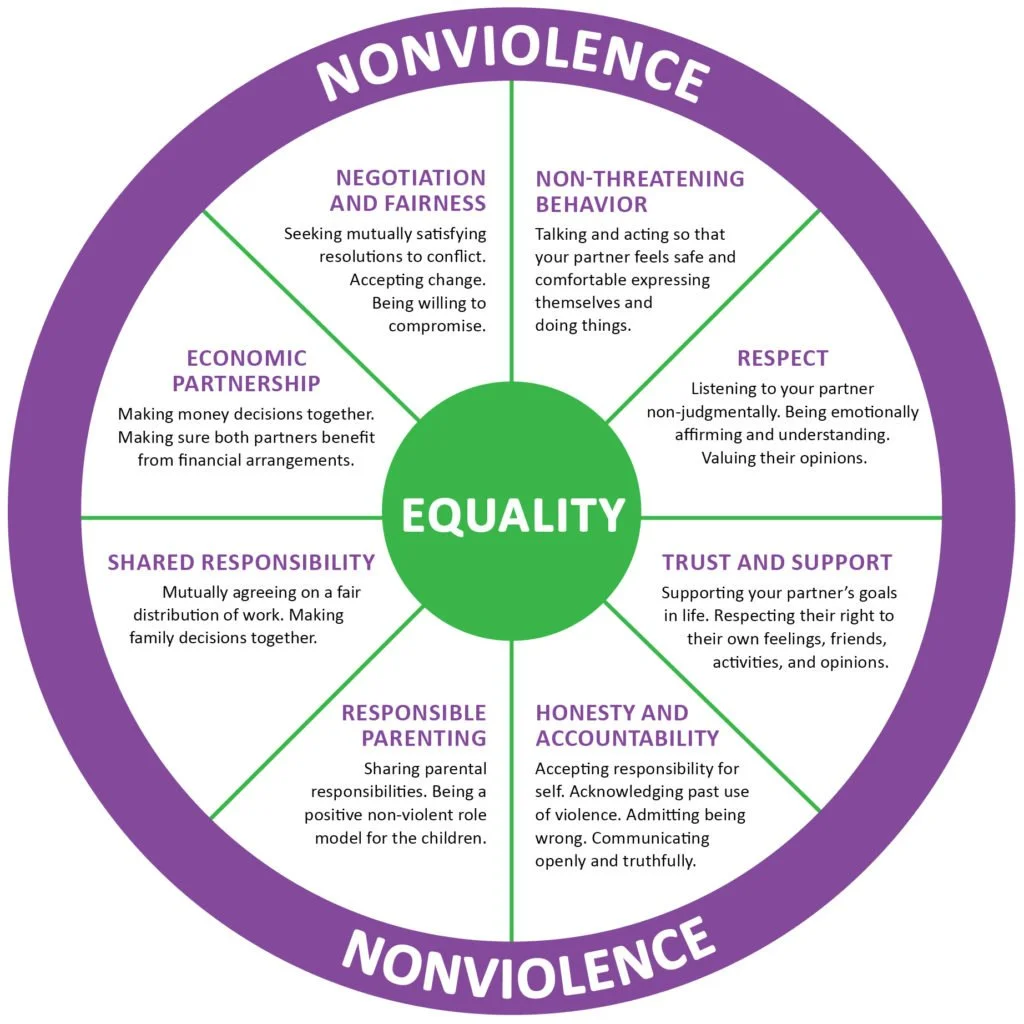
"Nonviolence is a powerful and just weapon, which cuts without wounding and ennobles the man who wields it." ~Martin Luther King, Jr.
A FINAL WORD ON WHY THIS ALL MATTERS SO MUCH TO ME, AND SHOULD TO YOU AS AMERICANS TODAY
The Story of South Africa – A Long Walk to Freedom
The story of South Africa, and my story as a South African, is a story about victims and perpetrators at a social level. It is also the story of humankind at an individual and very personal level. But this is only part of the story. Ultimately, it is a story of liberation, healing, and freedom - of transcending the paradigm of oppression and suffering. My hope is that you will find many similarities to my story in your own personal lives and the social climate you find yourselves in today.
In the election of 1948, Afrikaner nationalism won a decisive victory, and this government decided to choose a policy of segregation of the races called apartheid. I was born 4 years later and grew up during the increasingly violent implementation of this heinous policy, which was rooted in fundamental Calvinistic Christian beliefs. Afrikaners believed they were God’s chosen people. In 1951, Dr. J.C. Lombard, a well-known theologian, justified apartheid, greed, and power-mongering in the following way
~ I quote,
“God is the great Divider,” who “found it good to establish boundaries between people and groups of people.” “We believe that white and non-white in South Africa, in the light of different cultural peculiarities, psychological differences, biological differences, and differences in political aspiration as well as group affiliation, stand under different laws of life.”
“The primitive and immature person can be content with passive participation and can but bow humbly because his level of civilization does not justify any voting right ... In this regard, our greatest problem in South Africa is the viewpoint of revolutionary democracy of the school of Rousseau ... (according to which) everybody, in our case white and non-white, must have the franchise...”
However, white South Africans were clearly divided, but not by a great enough majority. The policy of apartheid created not only segregation between Blacks and Whites but also conflict and dissension between Whites. In 1948, Alan Paton, who wrote a book many of you are familiar with, “Cry the Beloved Country,” bitterly wrote the poem “We Mean Nothing Evil Towards You.” Here is a short excerpt.
Black man, we are going to shut you off
We are going to set you apart, now and forever.
We mean nothing evil towards you
You shall have your own place, your own institutions.
Your tribal customs shall flourish unhindered
You shall lie all day long in the sun if you wish it
All the things that civilization has stolen
Shall be restored. You shall take wives
Unhindered by our alien prohibitions
Fat bellied children shall play innocently
Under the wide-branching trees of the lush country
Where you yourselves were born.
Boys shall go playing in the reed lagoons
Of far Ingwavuma, the old names
Shall recover old magic, milk and honey
Shall flow in the long-forsaken places
We mean nothing evil towards you.
Our resolve is immutable, our hands tremble
Only with the greatness of our resolution.
We are going to set you apart, now and forever,
We mean nothing evil towards you.
Very quickly, parliamentary acts came into being to increasingly isolate and oppress Black, Coloured, and Indian people.
1949 Prohibition of Mixed Marriages Act
1950 Population Registration Act
1953 Reservation of Separate Amenities Act
1953 The much-hated Bantu Education Act required education to happen in Afrikaans - the language of the oppressor
1954 The Resettlement of Natives Act
The more fiercely and violently the government oppressed the black people, the greater the underground, illegal opposition grew.
1951 First non-violent passive resistance strike by the National African Congress (ANC)
1960 Sharpeville massacre, police opened fire on school children peacefully protesting Afrikaans as the medium of education- all political parties banned
1961 ANC decides to engage in armed struggle
1962 Mandela was sentenced to 3 years’ imprisonment for incitement plus 2 years for leaving the country without a passport
1963 Start of Rivonia trial - Mandela imprisoned until 1990
1986 Tutu, Archbishop of the Church of the Province of South Africa
1990 On the 11th of February, Mandela was released after 27 years of imprisonment
1994 First Democratic election in South Africa
~ April 27th. Mandela was 76 years old, and Tutu was 62 years old
1994 Mandela was elected President on May 9th
1995 The President established the Commission for Truth and Reconciliation on the 15th December with Tutu at the head to deal with the atrocities and
human rights violations of the era of apartheid, from 1960 to 1994.
White South Africans, in their collective guilt and shame for centuries of being persecutors, believed that a black government would mean the seizing of land and property and massive, violent retribution. Ten years after the Commission for Truth and Reconciliation, it has still not happened. That so much reconciliation and healing has happened in South Africa is a miracle brought about by the leadership of people who have reconciled the splits in their own psyches, people who are internally whole and free. Internal wholeness, healing, and freedom, even in a few people, result in the possibility of healing for a nation. Leaders who are internally at war with themselves, ignorant of their motives, and ruled by fear and anger, cannot lead the world to peace.
Mandela set the stage. One of the first acts passed in his government was the abolition of the death penalty - a clear statement that there would be no retribution. He invited his white gaoler to attend his inauguration as President as an honored guest, the first of many spectacular gestures he made that showed his breathtaking magnanimity and willingness to forgive and heal a torn and broken nation.
The Commission for Truth and Reconciliation faced a major challenge. How does one deal with the oppressor without becoming an oppressor oneself? How does one move outside of a paradigm of revenge – i.e., retributive justice, of an eye for an eye, a life for a life. And how does one do this without passively sweeping everything under the rug? Healing can never happen as long as one agrees to being either a perpetrator or a victim. Archbishop Desmond Tutu summed it up by saying that neither the Nuremberg model of retributive justice, nor national amnesia was a viable option. A third way was chosen. The way known in South Africa is Ubuntu. This is a difficult word to translate because it implies a paradigm rather than just a word. It speaks of the very essence of being human. It means being generous, hospitable, friendly, and compassionate. It means my humanity is inextricably linked to yours. We are one. A person is a person through other people. I am human because I belong, I share, I participate. A person with ubuntu is open and available to others, affirming of others, does not feel threatened that others are able and good; for he or she has a proper self assurance that comes from knowing that he or she belongs in a greater whole that is diminished when others are humiliated or diminished, when others are tortured or oppressed or threatened as if they were less than who they are.
Barbara Masikela, the then South African ambassador to the United States, said: “Nelson Mandela’s greatness lies, not in what he has done, but in his admission that he does what he does because of others and with others.”
This is not a new paradigm - it is the way of the Christ, the Buddha, Mohammed, Krishna, and more recently Mandela, Tutu, Aung Sun Suu Kyi, Thich Nhat Hanh, just to name a few. Ubuntu is being true to ourselves and our true nature, which is always and only essentially loving and good. It is the capacity to prevent fear from dominating our decision-making.
At the Rivonia trials, which condemned Mandela to 27 years in prison, Mandela and his comrades made a decision. If the courts pronounced the death penalty, they would not appeal the sentence. They would not recant, they would not compromise, they would not bargain. They would stand by their truth. This is not to be a victim. This is to be victorious over fear, even fear of death. Without this kind of inner courage to make the right decisions despite fear, South Africa could not be what it is today.
And so the Commission for Truth and Reconciliation embarked on a course of compassionate accountability. A national amnesty was granted to every perpetrator who committed crimes as part of the political struggle, provided they came forward and publicly confessed their crimes and told the full story. If they did not, they were subject to the laws of the land and the criminal justice system, which, like all legal systems, is retributive but, in South Africa, is no longer ultimately so. To avoid this, they did not even have to apologize; they merely had to tell the truth about the atrocities they had committed.
This might seem like a small thing. It is not. The process the TRC employed spoke of mercy, wisdom, and compassion that facilitated the healing not only of the victim but also of the perpetrator. All real love is FOR all people, FOR both sides.
Archbishop Tutu’s call for compassion and forgiveness resonated throughout the hearings. He often used the phrase that my mother used so often - “There but for the grace of God go I.” When Tutu says it, he is appealing to the victims of apartheid to have compassion for the perpetrators, recognizing that within each of us is the capacity, born of fear, to hurt others, and a recognition of how much pain someone must be in to perpetrate violence. The irony of this always amuses me. My mother would say this to us as children to remind us to be grateful for our privilege, status, wealth, and opportunity!
Contemplate for a moment confessing on international television the thing you are most ashamed of in your life, and that no one, not even your spouse, knows about you. This is what was required of men and women who had hideously tortured, murdered, and raped other human beings. Full confession in front of the camera and the world. Some had the character to do this, some did not.
#### Winnie Mandela, who was responsible for the torture and murder of people thought to be traitors to the cause of the ANC, was someone who eventually had the courage to do this. This is what Tutu said to her during the hearings:
”I speak to you as someone who loves you very deeply, who loves your family, very deeply. I would have said to you: Let us have a public meeting, and at that public meeting, for you to stand up and say, 'There are things that went wrong, and I don’t know why they went wrong.’ There are people out there who want to embrace you. I still embrace you because I love you and I love you very deeply. There are many out there who would have wanted to do so if you were able to bring yourself to say something went wrong and say,“I am sorry. I am sorry for my part in what went wrong.” I believe we are incredible people. Many would have rushed about in their eagerness to forgive and embrace you. I beg you, I beg you, I beg you, please - I have not made any particular finding from what has happened here. I speak as someone who has lived in this community. You are a great person, and you don’t know how your greatness would be enhanced if you were to say, “Sorry, things went wrong, forgive me.” I beg you.” (end of quote)
Mrs. Madikizela-Mandela responded:
“Thank you very much for your wonderful, wise words. That is the father I have always known in you. I am hoping it is still the same. I will take this opportunity to say to the family of Dr. Abubaker Asvat,and to Stompie's mother, how deeply sorry I am. I have said so to her a few years back, when the heat was very hot. I am saying it is true; things went horribly wrong. I fully agree with that, and for that part of those painful years when things went horribly wrong, and we were aware of the fact that there were factors that led to that, for that I am deeply sorry.”
The meeting was adjourned at this point, and Tutu says, “It may have been considered a lukewarm plea, but I am not sure that we are right to scoff at even what might appear to be a half-hearted request for forgiveness. It is never easy to say, “I am sorry,” they are the hardest words to articulate in any language. I often find it difficult to say them even in the intimacy of my bedroom to my wife.” (end of quote.)
Instead of receiving the death penalty, Winnie Mandela continued rebuilding her country and herself - always in her own inimitable and controversial way...
On the other hand, President Botha and, to a lesser extent, President de Klerk, were unable to take ownership. They are little men. De Klerk qualified his apology out of existence. We have to make this important decision in life. Will I take responsibility for my life or not?
There is only one crime that is not pardonable, and that is the one that cannot be confessed. Excuses cannot be forgiven. To have so much shame that you cannot own up to what you have done is called Pride. It is the sin of ex-presidents Botha and de Klerk. If nothing has been admitted, nothing can be healed or forgiven. The Truth and Reconciliation Commission was based on this premise.
Healing happens when we take responsibility. We admit what we have done to ourselves and to others.
One of the slogans of the Truth and Reconciliation Commission was, “The truth might hurt, but silence kills.” Unless we can take ownership and speak the truth, the acid stain on our inner life gradually erodes away the entire person and leaves a mere hollow husk.
Mandela himself was able, with grace, ease, and humility, to own his own shortcomings. In an interview with Oprah, one time, he said, “In my younger days, I was arrogant - jail helped me to get rid of it. I did nothing but make enemies because of my arrogance. He added that he abhors ignorance, which he defines as a person’s inability to see what unites us instead of only those things that divide us. A good leader can engage in a debate frankly and thoroughly, knowing that at the end, he and the other side must be closer and thus emerge stronger. You don’t have that idea when you are arrogant, superficial, and uninformed.”
Another prerequisite for healing is to see and understand our own dark motives with compassion and acceptance, rather than judgment. We are all one. What I cannot do for myself I cannot do for you. All aspects of oneself that are viewed as unacceptable and relegated to the underworld of the unconscious are then recognized in the other, who becomes the enemy to be destroyed. This is a projection that underpins the ways we reject others.
To collapse into shame and self-loathing is to become self-absorbed and self-pitying. What was done becomes all about me, not about you. It begs the victim to feel sorry for you and to help you. It is not loving, and without loving and accepting yourself, you cannot love another.
Apartheid means a condition or state of apartness. Inner apartheid results in external apartheid. Every damning judgment I have of myself will contribute to the fragmentation of the world.
Healing requires an apology, not only with empathy and understanding, but also a willingness to pay compensation in the way that is most helpful to the victim. Unfortunately, this part of the reconciliation process never happened adequately. To compensate all the victims would have bankrupted the country. Token gestures were made. Real compensation will have to happen on an individual and daily basis for decades to come.
Healing is understanding the effects of my behavior on others, myself, and my community with empathy. Empathy requires knowing what I feel -because if I do not, how can I possibly care about how you feel?
Healing happens when we are allowed to tell our story, without interruption, without corrections, without our emotions, our perceptions, thoughts, or desires being challenged. Healing happens when we are listened to, and our story is accepted. Healing happens when someone weeps with us, when the one presiding over the hearing of our story breaks down and weeps, when the world weeps with us for what we have done and for what has been done to us. Only hearts broken open with compassion can weep.
A poem sent in by a citizen during the hearings says:
A world is wept.
Blood and pain seep into our listening: into our wounded souls.
The sound of your sobbing is my own weeping;
Your wet handkerchief, my pillow for a past so exhausted it cannot rest - not yet.
Speak, weep, look, listen for us all.
Oh, people of the silent, hidden past.
Let your stories scatter seeds into our lonely, frightened winds.
Sow more, until the stillness of this land can soften, can dare to hope and smile and sing;
Until the ghosts can dance unshackled,
Until our lives can know your sorrows
And be healed.
The horrors perpetrated by the South African government and its citizens, will be added to the annals of atrocities committed by humans over the history of the world, but what is enduring is the healing that happened - the image that sums it up in my mind is the televised scene of two mothers, one black and one white, sobbing, embracing one another, comforting one another, united in their common suffering and grief. The white mother was the mother of a state torturer. The black mother was the mother of the young man tortured and killed in detention by the white woman’s son. If this is possible, then the world can heal itself.
Antje Krog, an Afrikaans journalist that covered the hearings of the TRC expressed for me and many South Africans the gratitude we feel for the TRC - not only the leaders but the victims and perpetrators who transcended hatred and showed us how to love, when she says, “Against a flood crashing with the width of a brutalizing past on to new usurping politics, the Commission has kept alive the idea of a common humanity. Painstakingly, it has chiseled a way beyond racism and made space for all of our voices. For all its failures, it carries a flame of hope that makes me proud to be from here, of here.
But I want to put it more simply. I want this hand of mine to write it.
For us
all; all voices, all victims:
Because of you
this country no longer lies
between us but within,
It breathes becalmed
after being wounded
in its wondrous throat
In the cradle of my skull
it sings, it ignites
my tongue, my inner ear, the cavity of heart
shudders towards the outline
new in soft intimate clicks and gutturals
of my soul
The retina learns to expand
daily because by a thousand stories
I was scorched
a new skin.
I am changed for ever. I want to say
forgive me
forgive me
forgive me
You whom I have wronged, please
take me
with you.”