Re-Parenting II - Attachment and Boundaries
Following on from our first foundational Re-Parenting Class, we are going to be expanding our understanding of how the attachment styles lead to poor boundaries - either too rigid, too abusive, too porous, or none at all - and all the combinations in between. We will examine how the original parenting was internalized and becomes our internal style of relating to ourselves, that is then projected into our relationships with others.
FOR CONTEMPLATION
“The simple fact is that we live in a world of conflict and opposites because we live in a world of boundaries. Since every boundary line is also a battle line, here is the human predicament: the firmer one’s boundaries, the more entrenched are one’s battles. The more I hold onto pleasure, the more I necessarily fear pain. The more I pursue goodness, the more I am obsessed with evil. The more I seek success, the more I must dread failure. The harder I cling to life, the more terrifying death becomes. The more I value anything, the more obsessed I become with its loss. Most of our problems, in other words, are problems of boundaries and the opposites they create.”
~Ken Wilber
Lesson One - Defining Boundaries
What are healthy boundaries?
At the most basic level, a healthy boundary is one that allows all that is needed for growth into the organism, and dispels or keeps out everything that is destructive to life. This is a self-regulating, organic, and natural capacity of all organisms.
The process of osmosis is a perfect example of a boundary created by a plant cell membrane; it allows all that is necessary for life, growth and expansion into the plant, and maintains an inner equilibrium of health, and It also lets go of and rids itself of what is toxic to life, what constricts, and what kills life.
Our lungs are an example of the organ whose membranes absorb and let in life-giving oxygen and rid the body of carbon dioxide which is the waste product of inner processes of metabolism and growth.
Consider if this boundary was either too rigid and impermeable, or was too permeable, or wasn’t there. Consider how this would threaten the very existence of the organism. Can you think of examples in life of boundaries that are too rigid or too permeable? What is the result? Now think about this in your own life. When have your internal boundaries been too rigid (resistance) or too permeable (collapse)? An example would be when you do not have a loving relationship internally with your own experience and cannot set limits with acting out feelings (collapse) instead of expressing them, or when you know something is healthy for you, like exercise, and you refuse (resistance). Can you think of your own personal and specific examples in your inner relationship with yourself?
Healthy boundaries are necessary at the physical level for optimal physical growth, and they are also necessary energetically in terms of emotions, thoughts, and behavioral processes in our very complex lives.
We can therefore define a boundary violation, or unhealthy boundary as:
Any threat to a person’s emotional, intellectual, spiritual, physical, or sexual security or identity is a boundary violation whether this comes from another or is committed by you in your internal relationship with yourself. Pause here in your reading and see if you can find examples in each category of how you do this internally and so allow this to be done to you externally.
Another way to say this is, a boundary violation is anything that comes from your own, or another’s, unaware shame and fear, leading to power and control tactics.
What do we mean by a threat to your security or identity? Physical safety seems obvious, but when we come to identity things get a little trickier.
Your TRUE IDENTITY, IS THIS:
YOU ARE A SOUL OF INFINITE CONSICOUSNESS. THIS CONSCIOUSNESS IS THE VERY SAME AS SPIRIT – THE ENERGY OF LOVE AND TRUTH IN THE UNIVERSE.
Anything that someone says or does in relationship to you that is not in reverence, is not loving, clear, authentic, truthful and consistent with their TRUE SELF and YOURS, is a boundary violation.
Anything that you say to yourself or others that is not in reverence, is not loving, clear, authentic, and truthful about your identity or theirs, and is not a statement that is consistent with your TRUE SELF OR THEIR TRUE SELVES, is a boundary violation.
“Any attempt to impose your will on another is an act of violence.” ~ Gandhi
Anything that another says or does that is an attempt to impose their will on you is a boundary violation.
Anything you say or do that is an attempt to impose your will on another is a boundary violation.
Any thought, word, or deed that is motivated by unconscious fear and need is a boundary violation.
Any confusion or lack of clarity as to what constitutes a threat to a person’s identity or security is a boundary issue.
Every way in which you try to control and overpower yourself with judgments and hatred is a boundary violation.
Every way in which you are not empowered within by Truth and Love is a boundary violation.
© Lyndall Johnson
EXERCISE
Consider all the ways in which you have tried to impose your will on another instead of protecting your own boundaries (i.e. tried to make them change so you did not have to actually set
a limit) - emotionally, intellectually, physically, sexually, spiritually? Write different lists for each category. What is the difference between controlling someone else and setting a limit for yourself? One is a boundary violation and the other is healthy, like osmosis.
Consider how you have allowed others to impose their will on you physically, emotionally, intellectually, sexually and spiritually. Write lists for each heading. What is the difference between allowing another to control you and accepting some feedback from someone that is helpful? One is a boundary violation and the other is healthy, like osmosis.
How does one discern the difference?
Can you start thinking about how your parents related to you in a way that created rigid boundaries, or no boundaries, or confusing boundaries internally? Remember – how they related to you is the way you have learned to relate to aspects of your own self.
Come to the first class prepared to discuss this.
FOR CONTEMPLATION
“If I am not for myself, who will be for me? But if I am only for myself, then what am I?” ~The Talmud
“You best teach others about healthy boundaries by enforcing yours.” ~Bryant McGill
“Boundaries aren’t all bad. That’s why there are walls around mental institutions.” ~Peggy Noonan
“When we fail to set boundaries and hold people accountable, we feel used and mistreated.” ~Brené Brown
ADDITIONAL STUDY
https://www.truenaturecounseling.com/blog/2021/11/13/boundaries

Lesson Two - Examples of Emotional Boundary Violations
Below are several handouts outlining examples of emotional, intellectual, physical, and spiritual, boundary violations. Before you read them, journal about any examples you can find from your childhood and past experiences in relationships in each category, and consider how this would have impacted your inner relationship with your body, intellect, emotions, and soul. Consider the massive boundary violations in society in each category as well.
Emotional Boundary Violations - Read here
Intellectual Boundary Violations - Read here
Physical Boundary Violations - Read here
Sexual Boundary Violations - Read here
Religous/Spiritual Boundary Violations - Read here
EXERCISE
Now go back to the original examples you thought of and consider how your boundaries were violated as a child. What did this imprint in your psyche in terms of how you relate to others now? How are boundary violations that you experienced or have done, related to your attachment style? Are you avoidant, anxious, disorganized? Or a combination of all three? Are there ways in which you feel secure in relationships? Why? How does this go back to childhood?
ADDITIONAL STUDY
Broken Toys Broken Dreams: Understanding and Healing Codependency, Compulsive Behaviors and Family. by Terry Kellogg and Marvel Harrison
FOR CONTEMPLATION
“We can't manipulate people into swallowing our boundaries by sugarcoating them. Boundaries are a ‘litmus test’ for the quality of our relationships. Those people in our lives who can respect our boundaries will love our wills, our opinions, our separateness. Those who can't respect our boundaries are telling us that they don't love our nos. They only love our yeses, our compliance. ‘I only like it when you do what I want’.”
~ Henry Cloud, Boundaries: When to Say Yes, How to Say No to Take Control of Your Life
Lesson Three - Practical External Example
A very real, external, practical issue of how osmosis of boundaries is not working well is the boundary issues between countries. Surely, if everyone had a healthy attachment style and really functional boundaries there would be no boundary issues between countries, because a healthy self-regulating world would find ways to keep the whole world healthy and functional with good boundaries. What might this look like? Spend some time thinking about how you would create this if you were in charge. There is only one world. Territorial boundaries that are built are completely artificial and are the dark creations of fear. Read the definition of what constitutes boundary violations above.
Consider the following boundaries:
The Great Wall of China (5500.00 miles long)
Hadrians Wall across northern England (73 miles, right across England)
Medieval Walled Cities
The Berlin Wall (96 miles)
The Western Wall in Jerusalem
The Trump Wall (15 miles to the existing 645 miles)
What are the fears that lead to the walls? How do they lead to rigid, impermeable boundaries, (anxious, dismissive and avoidant attachment style) or boundaries that allow free flow of what threatens the well-being and identity of people (anxious and ambivalent attachment style)? Or in a more disorganized way keeps out potential resources of human life that could contribute to the common good and health of a country, and allows terrorists in? (Anxious disorganized style of attachment).
What would be required to have really good boundaries that allow for the free flow of people across nations and yet keep a limit with potentially dangerous and harmful people? What would your government policy be? What you come up with, or not, is a reflection of your own inner style of attachment and inner boundaries. How you relate to others externally is the relationship you have with all stages and ages within yourself.
FOR CONTEMPLATION
“It is not that physical boundaries don't exist -- if that were the case, there would be no differentiation, no color, no action. They do exist, but not as partitioning walls . . .they exist as differentiating outlines, articulating many different tastes, textures, and colors, without obscuring the underlying nature of everything as One. It is as though you have dropped different colors of dye into a fluid; many colors are swirling around, but it is still the same fluid. One way of putting it is that the boundaries define a difference, but not a separateness. So I am different from you, but I am not separate from you; people are different from each other, but they are not separate from each other. The existence of boundaries, then, does not negate the underlying unity. Boundaries are characteristic of the objective concepts or noetic forms, relevant on the level of creation and existence. Boundaries and the forms they define are characteristics of the thoughts of God, as it were. This is why we call the universe a mind. To the ego, separateness means impermeable boundaries, or isolation, but real separation is something quite different. Real separation means particularization out of the unity or, for human beings, individuation. It means recognizing that your true nature is not determined by external influences.” ~A.H. Almaas

Lesson Four - The Good Customs Official
The Good Customs official is a loyal employee of the Good Government. Internally, who is the good customs official and to whom does he/she owe allegiance?
This is an issue of You (a Soul) being in allegiance to the Spirit of Consciousness/LOVE within, instead of the ego, which tends to choose shame-based and frightened ways of coping that consider only the self-interest of survival, looking good, propping up the sense of worthlessness, and on and on, often masquerading as love.
Consider the Customs Official that serves the government of the ego.
What does this part of you look like? Act like? Draw a picture.
How does this part think and feel about feeling having boundaries?
What motivates this customs official?
Have you been the recipient of this kind of behavior? - Journal about it.
Consider if the Customs Official inside of you served only the Government of Spirit?
What does this part of you look like? Act like? Draw a picture.
How does this part feel and think about having boundaries?
What motivates this customs official?
Have you been the recipient of this kind of behavior? - Journal about it.
Are you in allegiance to Spirit or Ego? How do you know?
Exercise
Now take this metaphor and apply it to your relationships.
You are the customs official of your own boundaries. Do you know the rules, regulations of other people’s entry into your life?
Who is allowed entry? Are they immigrants, tourists, visitors, on business only, permanent residents, or terrorists?
How long are you anticipating them staying? Are you granting a temporary visa to assess them for a while?
What are their motives in wanting to be in your territory? How would you know?
What cues are you looking for to make an assessment?
Have you allowed terrorists into your life and then struggled to get them out again because you did not assess correctly in the first place?
Have you been manipulated, coerced, bribed, intimidated, seduced into letting someone into your life/territory because your customs official was not well trained, open to a bargain, or fast asleep on the job?
Have you kept everyone out and denied entry because you perceive everyone to be a terrorist when they are not?
What have you learned over time about allowing or denying access or granting limited access only?
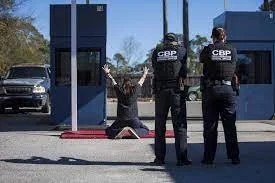


Your personal boundaries protect the inner core of your identity and your right to choices
~Gerard Manley Hanley
Additional Study
Read this poem by Mary Oliver to get a feel of the difference between a free soul and the function of ego.
Boundaries
There is a place where the town ends
and the fields begin.
It’s not marked but the feet know it,
also the heart, that is longing for refreshment
and, equally, for repose.
Someday we’ll live in the sky.
Meanwhile, the house of our lives is the world.
The fields, the ponds, the birds.
The thick black oaks—surely they are the
children of God.
The feistiness among the tiger lilies,
the hedges of runaway honeysuckle, that no one owns.
Where is it? I ask, and then
my feet know it.
One jump, and I’m home.
Lesson Five - Symptoms of Poor Boundaries
Consider how this has happened to you and how you have done these behaviors. Can you discern any patterns of dynamics - e.g. “I take care of you and you need to be taken care of,” that indicate an attachment style. How do these dynamics point to attachment styles of anxiety and ambivalence/avoidance/disorganization? For definitions of Attachment Styles - read here
Letting others define you or your reality by telling you what you perceive, think, feel and need and doubting your own perceptions, thoughts, feelings and needs. Defining for others what they feel, need, think and should do.
Letting others direct your life. Needing advice and permission to make decisions. Telling others what to do and giving advice.
Expecting others to anticipate and meet your needs and know your feelings automatically without ever expressing your needs e.g.“....if he really loved me, he would know…..” Anticipating and meeting needs of others without being asked.
Giving advice without being asked, enabling, care-taking and fixing another’s life. Expecting others to care-take and fix your life and that they have the answers for you.
Falling apart so someone else will take care of you. Picking up those that fall apart.
Allowing someone to take as much as they want i.t.o. time and energy. Giving others as much as they want in terms of time and energy.
Giving as much as you can to everyone all the time. Always listening and not talking. Taking as much time as you can from others. Talking all the time about yourself.
Taking as much as you can for the sake of taking. Giving as much as you can for the sake of giving.
Touching of any kind without permission. Never touching. Allow others to touch you when you don’t want it.
Accepting touch, food, gifts, sex, conversations, relationships that you don’t want. Giving what others may not want.
Being available, sexually, emotionally, intellectually, at cost to self. Isolating and never being available
Going against personal values, rights and needs to please others. Violating the values, rights and needs of others
Talking at an intimate level at first meeting or before knowing someone well. Never letting anyone be emotionally close.
Being too trusting of and naive about others. Not trusting others at all.
“Falling in love” with a new acquaintance, or with anyone who is “nice” to you. Fiercely independent and not “needing” anyone.
Being preoccupied with another person’s life - feeling another persons feelings. Disinterest in others.
Being sexual before other forms of intimacy are well established.
Not recognizing when your boundaries are violated or not recognizing inappropriate boundaries.
Self abuse, substance abuse, food abuse. Allowing others to abuse themselves without limits.
Sexual, physical, emotional and intellectual abuse - receiving or giving.
All Power and Control tactics used to get needs met.
EXERCISES
Go through these lists and journal about the ways in which any of these have been true for you and see if you can consider the motivation rooted in your childhood and ways in which you tried to be safe and loved in your relationship to your parents. How do you act out these dynamics because it is a desperate attempt at getting a need met that you learned as a tiny child before you had awareness of consequences of choices and could not see the big picture? What have the consequences been to you in your life of enacting these dynamics within yourself and without with others? Can you start practicing at least knowing the fear and need that leads to the dynamic and realize that you are there - present, accepting and seeing?
Collect pictures of boundaries - walls, fences, prison bars, river banks, rooms of houses, doors, windows and journal about them. How would you describe your boundaries? What do they look like? Remember they are internal to you. Are they too rigid, too permeable, non-existent, disorganized and erratic?
ADDITIONAL STUDY
https://www.youtube.com/watch?v=rtsHUeKnkC8
This Ted Talk talks about what we say “yes” and “no” to, and what we let in and what we do not let in.
FOR CONTEMPLATION
“I mean No is power. No says, "I'm in charge." Think about how many times you've said yes in the past year, and how many times you would've liked to have said no instead. Maybe being able to say no is the one thing that keeps us sane. Some people go through their whole lives saying yes over and over again--yes to things they don't want to do but feel obliged to; yes to things that allow other people to take advantage of them, just because that's the way things are, the way things have always been. Some people need to learn how to say no. Because every time they say yes, they say no to themselves.”
― Danny Wallace, Yes Man
“I have always said 'yes' because it never occurred to me that I could not do anything I set out to do. It is an attitude I endorse completely, although it does matter to whom and to what one says 'yes'--and the manner in which the monosyllable is spoken. You can always say 'yes' and change your mind afterward to 'no,' but 'no' once spoken is irrevocable. The irrevocable, in the theatre [sic] as elsewhere, is to be sternly resisted.”
― Clifton Webb
Lesson Six - Mending Wall ~Robert Frost
This poem follows on from the Ted talk above the previous lesson, so make sure to watch that first.
Something there is that doesn’t love a wall,
That sends the frozen-ground-swell under it,
And spills the upper boulders in the sun;
And makes gaps even two can pass abreast.
The work of hunters is another thing:
I have come after them and made repair
Where they have left not one stone on a stone,
But they would have the rabbit out of hiding,
To please the yelping dogs. The gaps I mean,
No one has seen them made or heard them made,
But at spring mending-time we find them there.
I let my neighbor know beyond the hill;
And on a day we meet to walk the line
And set the wall between us once again.
We keep the wall between us as we go.
To each the boulders that have fallen to each.
And some are loaves and some so nearly balls
We have to use a spell to make them balance:
‘Stay where you are until our backs are turned!’
We wear our fingers rough with handling them.
Oh, just another kind of out-door game,
One on a side. It comes to little more:
There where it is we do not need the wall:
He is all pine and I am apple orchard.
My apple trees will never get across
And eat the cones under his pines, I tell him.
He only says, ‘Good fences make good neighbors.’
Spring is the mischief in me, and I wonder
If I could put a notion in his head:
‘Why do they make good neighbors? Isn’t it
Where there are cows? But here there are no cows.
Before I built a wall I’d ask to know
What I was walling in or walling out,
And to whom I was like to give offense.
Something there is that doesn't love a wall,
That wants it down.’ I could say ‘Elves’ to him,
But it’s not elves exactly, and I’d rather
He said it for himself. I see him there
Bringing a stone grasped firmly by the top
In each hand, like an old-stone savage armed.
He moves in darkness as it seems to me,
Not of woods only and the shade of trees.
He will not go behind his father’s saying,
And he likes having thought of it so well
He says again, ‘Good fences make good neighbors.’
EXERCISES
Read this famous poem several times and consider what needs to be kept out of your life, and what needs to be let in.
We both want walls for the wrong reasons and don’t want walls for the wrong reasons. We must know the right reasons and the right “yes,” and the right “no.”
Think of how in the last week you have said “yes” and “no” out of a motive of loving good care for yourself and another
Think of how in the last week you have said “yes,” and “no” to yourself and others out of fear.
How is this a pattern that reflects your attachment style? How did it develop?
Think in the poem how the wall is torn down for the wrong/right reasons and how it is built up for the wrong/right reasons. It is a very deep and profound poem. Sit with it…
How does the need for boundaries shift and change depending on stages of development and attachment styles? What attachment style does the lady on the couch have? What attachment style does the therapist have?
Come to the next class ready to discuss these questions
Lesson Seven - Internal Boundary Violations
The Internalized Parent/Culture
“If you had a person in your life treating you the way you treat yourself, you would have gotten rid of them a long time ago...”
~Cheri Huber, There Is Nothing Wrong with You: Going Beyond Self-Hate
Consider all the lists above in the first lesson and then consider how you do this to yourself internally. How do you put yourself down, criticize and hate on yourself? How do you resist creativity inside with all your self-doubt? How do you limit your options and choices because of “what people will think?” How do you force yourself into a life style that cramps and stifles you because it is practical and makes money? How do you use the excuse, “It costs too much money” to not pursue interests you may have? How do you not care for your body, your emotions? How do you feed yourself junk because you want to save time? How do you believe self-limiting and hateful things about yourself? How do you abuse yourself actively or passively emotionally, intellectually, physically, sexually? In other words how have you become your parents to yourself without even realizing it? How are you now the internal perpetrator and the victim of your own perpetration? The quest in reparenting yourself is to find The Other, instead of living in the dynamic of being both Victim and Perpetrator to yourself. The Other is your TRUE SOUL/SELF. To do this means to live into being the Loving and Authentic Truth to yourself, so that the split between you being a victim and a perpetrator can be healed. It means learning to see and accept the ways in which you have perpetrated and knowing the pain you have inflicted on yourself - and doing it without perpetrating on the Perpetrating you, or collapsing into self pity, because you have been so cruel to yourself. You yourself violate your own inner boundaries - start seeing it.
P
– O (I Am Self)
V
EXERCISES
Spend time reflecting on how you decided to not be like your parents with your children, but ended up being just like your parents in your internal relationship to yourself.
Contemplate the ways in which you have become just like your parents. How did this happen?
What beliefs do you have that support perpetrating against yourself, being a victim by never setting limits with your own self perpetration?
Think of the relationship between your internal choices, attitudes, beliefs about yourself and your level of anxiety and shame - these all indicate internal perpetration.
If you perpetrate internally and continue to be a victim of this internal perpetration, you will do the same in all your relationships with others as well, without any awareness of either the inner or the outer dynamic.
Come to group prepared to discuss
“I wanted to kill the me underneath. That fact haunted my days and nights. When you realize you hate yourself so much, when you realize that you cannot stand who you are, and this deep spite has been the motivation behind your behavior for many years, your brain can’t quite deal with it. It will try very hard to avoid that realization; it will try, in a last-ditch effort to keep your remaining parts alive, to remake the rest of you. This is, I believe, different from the suicidal wish of those who are in so much pain that death feels like relief, different from the suicide I would later attempt, trying to escape that pain. This is a wish to murder yourself; the connotation of kill is too mild. This is a belief that you deserve slow torture, violent death.”
― Marya Hornbacher, Wasted: A Memoir of Anorexia and Bulimia
As you read this, can you start to imagine what might have happened to this child to have internalized such brutal hatred?
Now answer this question for yourself. You too have this dynamic alive in you.
Additional Study
https://www.ted.com/talks/leigh_clark_self_loathing_is_a_motherf_cker

Lesson Eight - Boundaries in Child Rearing
Raising a child is a very difficult job, for which we are all completely unprepared, being in an unaware ego state of consciousness in young adulthood. The pitfalls in violating boundaries are too many to name. However, there are a few ways for us to start considering how hard it was for our parents to meet our needs exactly correctly, in each and every stage and age through which we grew. They either met them too much, too little, too inconsistently, too harshly, too gently… and for those of us that have raised children and grandchildren, we know the uncertainty with every limit we are required to have and hold with them, when their behavior hits a pocket of unawareness and confusion in us. Our parents did not do it perfectly and we did not do it perfectly - now as adults it is our job to learn how to do it for ourselves with the maturity of awareness that is connected to our Source of Truth and love - we start finding how to redo the parenting we got and do it differently with ourselves now.
EXERCISE
Consider the following handout and then assess for yourself, “How were my needs met in each of these areas, at each and every stage and age of my development.? Where do I have a memory that brings shame, pain, anger when my boundaries were violated in some way through my needs being too harshly or too leniently tended to?”
When your needs for affirmation, dependency, intimacy and accountability were not met correctly, you developed strategies, called defenses, that are desperate attempts to get those needs met from others instead of now, as an adult, recognizing the need and learning to meet it yourself. These strategies or defenses are now all boundary violations of someone else that you are attempting to control to meet your needs,
Consider how the template for attachment to others was laid in childhood and has resulted in either dependency, codependency and enmeshment, or fierce independence and distance, or interdependence and respect.
Can you tell the difference between affirmation and praise?
Can you tell what is an age-appropriate expectation for children at each age? (dependency) Eg. pottly training, dressing themselves, doing homework alone?
Was there the intimacy of sharing feelings, experiences, thoughts, needs in the family system? Was intimacy appropriate or intrusive or non existent? What aspect of your humanity was denied?
How were you taught accountability - to take responsibility for your thoughts, feelings, needs and actions and to be able to apologize for mistakes?
How were you spoiled and taught to be entitled without regard for your privilege?
How were you shamed for every mistake?
Journal about your experiences and come to class prepared to discuss or ask questions if you are not clear about what this all means for you.
Independence (Extreme)
I do my thing, and you do your thing
I am not in this world to live up to your expectations
And you are not in this world to live up to mine
You are you and I am I
And if by chance we meet, it’s beautiful
If not, it can’t be helped. ~Fritz Perls
Dependence/Codependence (Extreme)
We do our thing together
I am here to meet all your needs and expectations
And you are here to meet mine
We had to meet, and it was beautiful
I can’t imagine it turning out any other way. ~Jerry Gillies
Interdependence (Balanced)
Love one another, but make not a bond of love:
Let it rather be a moving sea between the shores of your souls.
Fill each other’s cup but drink not from one cup.
Give one another of your bread but eat not from the same loaf.
Sing and dance together and be joyous,
but let each one of you be alone
Even as the strings of a lute are alone
though they quiver with the same music
And stand together yet not too near together;
For the pillars of the temple stand apart,
And the oak tree and the cypress grow
not in each other’s shadow
But let there be spaces in your togetherness
And let the winds of the heavens dance
between you. ~ Kahlil Gibran
Recommended Reading
“Children who are not encouraged to do, to try, to explore, to master, and to risk failure, often feel helpless and inadequate. Over-controlled by anxious, fearful parents, these children often become anxious and fearful themselves. This makes it difficult for them to mature. Many never outgrow the need for ongoing parental guidance and control. As a result, their parents continue to invade, manipulate, and frequently dominate their lives.”
Susan Forward, Toxic Parents: Overcoming Their Hurtful Legacy and Reclaiming Your Life



Lesson Nine - Defenses and Attachment Styles
Take some time to make a list of what your typical defenses are when you feel threatened by the perception that a need is not being met, or you want someone else to meet your need. If you are struggling to come up with a list, consider defenses as all that we do in thought and behavior that is a desperate attempt to get a need met from someone else or to avoid a feeling that frightened you - like fear itself, or shame or anger - either internally or as projected by someone else. Every time you think or act in these ways without awareness of your underlying motive, you are violating your own boundary or that of someone else.
Defenses can be categorized, just like any animal into fight/flight/freeze responses. Write your list under the three categories and see if you can come up with recent examples in your everyday life. For instance, if someone asked you a question in group and caught you off guard and suddenly you cannot think and you cannot find an answer. This is a freeze defense agains the fear of thinking you “don’t know,” and will say something wrong and then feel shame. How is this both a fight against yourself and flight from others response? How would this go back to childhood? How does this reflect a lack of trust and why? How did this originate in childhood? What need within yourself can you meet within yourself in this situation?
For a list of examples of defenses - go here once you have completed the above reflection
EXERCISE
If you were an animal, what animal would you be in terms of defense tactics? How have you evolved this tactic and rationalized it as right and correct, instead of what it is - just a defense against your own fear, shame and need? What is your habitual and most used way of relating or not relating, internally and externally?
See if you can find within yourself defenses of which you have been unaware and investigate deeply the underlying emotional feelings and needs that are propelling these behaviors. Can you see the consequences to yourself and others in your continued re-enactment in unawareness? With awareness these tactics become resources in the world, and can be used from a loving aware heart to bring about different outcomes that are creative instead of destructive.




Lesson Ten - Making Excuses for Bad Behavior
th DignityMaking excuses for your own bad behavior or another’s is always living a life lacking in dignity, truth and belief in the ultimate goodness and capacity of a human life. Neither a diagnosis, an illness, dying, suffering, tiredness, stress, old age or terrible external circumstances are ever an excuse for not having good boundaries, good manners, and good behavior - either by using and abusing others, or allowing others to use and abuse you.
Exercise
Consider all the ways in which you violate the boundaries of others and make excuses for yourself
Consider all the ways you allow others to use and abuse you and make excuses for them rather than face your fear of having good limits
What is the difference between excuses for yourself and others, and having forgiveness and mercy, understanding and empathy for yourself and others for mistakes made?
Read this website and take inventory of yourself
Lesson 11 - Difference between Setting a Limit and Being Controlling and Aggressive
Motive is everything. When we say “No,” to people, even if it is said politely and respectfully, but is from a place of denied anger, shame, fear or unaware need, we are aggressing. When we say, “No,” because it is from a place of full awareness of deeper underlying feelings and needs, then it is setting a limit from a place of love and truth.
Limits are necessary for safety in a physical world. And there is no “safety “ emotionally for someone if they are kept physically safe through mental and emotional abuse. It is the classic example of “I am beating you for your own good.” In this case I will endanger your physical safety to ensure your emotional need for acceptance from me and the culture. This is a horrible double bind. There is no good in this “limit.”
Think of examples when people have “set limits with you,” leaving you feeling shamed, diminished, hurt, humiliated and frightened.
Think of examples when you have “set limits,” maybe very nicely, with underlying resentment, rage, hurt, shame, fear that goes unexpressed, or is unknown to you. How did it feel to you and the other person?
If our choices in how we communicate and behave are motivated by unaware need and feeling, then the consequence will be destructive and hurtful to ourselves and others in the long run, even if it results in immediate compliance by ourselves and others.
If how we communicate and behave are spontaneous, from a place of clarity and awareness of feelings and needs, then not only will the communication be empathic and understanding in the limit, but the consequence will be creative and life giving in the the long run.
MOTIVE ORIGINAL STATE OF BEING
UNAWARE and so determined AWARENESS of feelings, needs and beliefs
by feelings, needs and beliefs and so determined by Love and Truth
BEHAVIOR
Defense or tactics of passivity and aggression Non-defensive, empathic, understanding of self and others
of self protection to deny feelings, needs. leading to natural limits
CONSEQUENCE
Short term power and control over self/ others Short term process engaged
Long term destruction and further suffering Long term creative solutions
The theory of this is all very logical and obvious, but now the work is to apply it to everyday living with yourself and others. When do you need to set a loving limit with yourself and instead attack and blame yourself, or excuse and passively agree to doing what is destructive out of fear, or to avoid consequences of being truthful? When do you need to set a loving limit with someone else and instead nicely or not nicely, aggress, attack and blame? Or is your tendency to make excuses for the other person and “let them off the hook,” so to speak?
EXERCISE
Think about a time in your childhood when you were punished and your boundaries were violated by a parent in the name of discipline or limit setting.
Now in retrospect, what would limit setting have looked like, instead of the punishement and boundary violation that was called limit setting?
How might this have changed your life?
Can you now see why you were confused by being told you were to blame for the parental abuse through what you did in the example you used?
https://www.youtube.com/watch?v=rtsHUeKnkC8&list=TLPQMTMwOTIwMjROBejHgfA5xw&index=2
Lesson 12 - Patterns of Co-dependency - i.e. Unhealthy Boundaries
https://coda.org/meeting-materials/patterns-and-characteristics-2011/
Check out this website and if you can recognize yourself, join a Codependents Anonymous group, bring the list to your therapist, start paying close attention to your motives in your needs and feelings and seeing where they originated in your history. The following patterns below come from the website cited here.
DENIAL PATTERNS
CODEPENDENTS OFTEN...
Have difficulty identifying what they are feeling
Minimize, alter, or deny how they truly feel
Perceive themselves as completely unselfish and dedicated to the well-being of others
Lack empathy for the feelings and needs of others
Label others with their negative traits
Think they can take care of themselves without any help from others
Mask pain in various ways such as anger, humor, or isolation
Express negativity or aggression in indirect and passive ways
Do not recognize the unavailability of those people to whom they are attracted
LOW SELF-ESTEEM PATTERNS
CODEPENDENTS OFTEN...
Have difficulty making decisions
Judge what they think, say, or do harshly, as never good enough
Are embarrassed to receive recognition, praise, or gifts
Value others’ approval of their thinking, feelings, and behavior over their own
Do not perceive themselves as lovable or worthwhile persons
Seek recognition and praise to overcome feeling less than
Have difficulty admitting a mistake
Need to appear to be right in the eyes of others and may even lie to look good
Are unable to identify or ask for what they need and want
Perceive themselves as superior to others
Look to others to provide their sense of safety
Have difficulty getting started, meeting deadlines, and completing projects
Have trouble setting healthy priorities and boundaries
COMPLIANCE PATTERNS
CODEPENDENTS OFTEN...
Are extremely loyal, remaining in harmful situations too long
Compromise their own values and integrity to avoid rejection or anger
Put aside their own interests in order to do what others want
Are hypervigilant regarding the feelings of others and take on those feelings
Are afraid to express their beliefs, opinions, and feelings when they differ from those of others
Accept sexual attention when they want love
Make decisions without regard to the consequences
Give up their truth to gain the approval of others or to avoid change
CONTROL PATTERNS
CODEPENDENTS OFTEN...
Believe people are incapable of taking care of themselves
Attempt to convince others what to think, do, or feel
Freely offer advice and direction without being asked
Become resentful when others decline their help or reject their advice
Lavish gifts and favors on those they want to influence
Use sexual attention to gain approval and acceptance
Have to feel needed in order to have a relationship with others
Demand that their needs be met by others
Use charm and charisma to convince others of their capacity to be caring and compassionate
Use blame and shame to exploit others emotionally
Refuse to cooperate, compromise, or negotiate
Adopt an attitude of indifference, helplessness, authority, or rage to manipulate outcomes
Use recovery jargon in an attempt to control the behavior of others
Pretend to agree with others to get what they want
AVOIDANCE PATTERNS
CODEPENDENTS OFTEN...
Act in ways that invite others to reject, shame, or express anger toward them
Judge harshly what others think, say, or do
Avoid emotional, physical, or sexual intimacy as a way to maintain distance
Allow addictions to people, places, and things to distract them from achieving intimacy in relationships
Use indirect or evasive communication to avoid conflict or confrontation
Diminish their capacity to have healthy relationships by declining to use the tools of recovery
Suppress their feelings or needs to avoid feeling vulnerable
Pull people toward them, but when others get close, push them away
Refuse to give up their self-will to avoid surrendering to a power greater than themselves
Believe displays of emotion are a sign of weakness
Withhold expressions of appreciation
Read the following poems - each is a recognition of the co-dependent patterns we all fall into in unawareness
https://hellopoetry.com/tag/boundaries/#google_vignette
“The experience of real love also has to do with ego boundaries, since it involves an extension of one’s limits. One’s limits are one’s ego boundaries. When we extend our limits through love, we do so by reaching out, so to speak, toward the beloved, whose growth we wish to nurture. For us to be able to do this, the beloved object must first become beloved to us; in other words, we must be attracted toward, invested in and committed to an object outside of ourselves, beyond the boundaries of self. Psychiatrists call this process of attraction, investment and commitment “cathexis” and say that we “cathect” the beloved object. But when we cathect an object outside ourselves we psychologically incorporate a representation of that object into ourselves. For example, let us consider a man who gardens for a hobby. He “loves”gardening. His garden means a lot to him. This man cathected his garden. He finds it attractive; he has invested himself in it, he is committed to it – so much so that he many jump out of bed early Sunday morning to get back to it, he may refuse to travel away from it, and he may even neglect his wife for it. In the process of his cathexis and in order to nurture his flowers and shrubs he learns a great deal. He comes to know much about gardening – about soils and fertilizers, rooting and pruning. And he knows his particular garden – its history, the types of flowers and plants in it, its layout, its problems and even its future. Despite the fact that the garden exists outside of him, through his cathexis it has also come to exist within him. His knowledge of it and the meaning it has for him are a part of him, part of his identity, part of his history, part of his wisdom. By loving and cathecting his garden he has in quite a real way incorporated the garden within him, and by this incorporation his self has become enlarged and his ego boundaries extended.
What transpires then in the course of many years of loving, of extending our limits for our cathexes, is a gradual but progressive enlargement of the self, an incorporation within the world without, and a growth, a stretching and a thinning of our ego boundaries. In this way the more and longer we extend ourselves, the more we love, the more blurred becomes the distinction between the self and the world. We become identified with the world. And as our ego boundaries become blurred and thinned, we begin more and more to experience the same sort of feeling of ecstasy that we have when our ego boundaries collapse and we “fall in love.” Only, instead of having merged temporarily and unrealistically with a single beloved object, we have merged realistically and more permanently with much of the world. A “mystical union” with the entire world may be established. The feeling of ecstasy or bliss associated with this union, while perhaps more gentle and less dramatic than that associated with falling in love, is nonetheless much more stable and lasting and ultimately satisfying. It is the difference between the peak experience, typified by falling in love, and what Abraham Maslow has referred to as the “plateau experience.” The heights are not suddenly glimpsed and lost again; they are attained forever.” ~M. Scott Peck
Man is
a great wall builder
The Berlin Wall
The Wailing Wall of Jerusalem
But the wall
most impregnable
Has a moat
flowing with fright
around his heart
A wall without windows
for the spirit to breeze through
A wall
without a door
for love to walk in
OSWALD MTSHALI
Soweto poet